Making company bikes attractive in winter: 8 tips for employers
More exercise, less stress, being more mindful when traveling—many employees start the year with fresh resolutions. Employers can use this momentum to not only support their team, but also motivate them in the long term. In this article, we explain how company bike leasing programs can play a key role in this.
The most important information at a glance
Take winter obstacles seriously: Darkness, wet conditions, cold weather, and safety concerns are the most common reasons why employees don't cycle in winter.
Safety first: Lights, visibility, and suitable tires can lower this barrier to entry in many cases.
Accessory support has an immediate effect: Small budgets for appropriate equipment, but also for gloves, rain gear, and reflective equipment, noticeably increase the usage rate.
Offer organized winter checks: Brakes, lights, tire pressure, and chain maintenance make company bikes “winter-proof.”
Motivation through community: “Winter cycling challenges” and similar campaigns are more effective than mere appeals.
Winter is not inherently “unfriendly” to cycling. But it does pose greater challenges than the warmer months. This is evident not only on the roads, but also in the results of traffic surveys, which regularly show that people cycle less in winter. When employees are less likely to use their company bikes between November and March, it is usually not because they don't want to, but because of a combination of very specific obstacles.
For many, it starts with darkness: those who commute in the dark in the morning and evening and feel unsafe in traffic quickly revert to using their car or public transport. Added to this are cold, wet, and windy conditions—and often the wrong equipment. Without warm gloves or weatherproof clothing, even a short distance becomes unpleasant. Slippery paths also play a major role: snow, slush, wet leaves, or ice are enough to reduce the feeling of safety and thus the motivation to cycle.
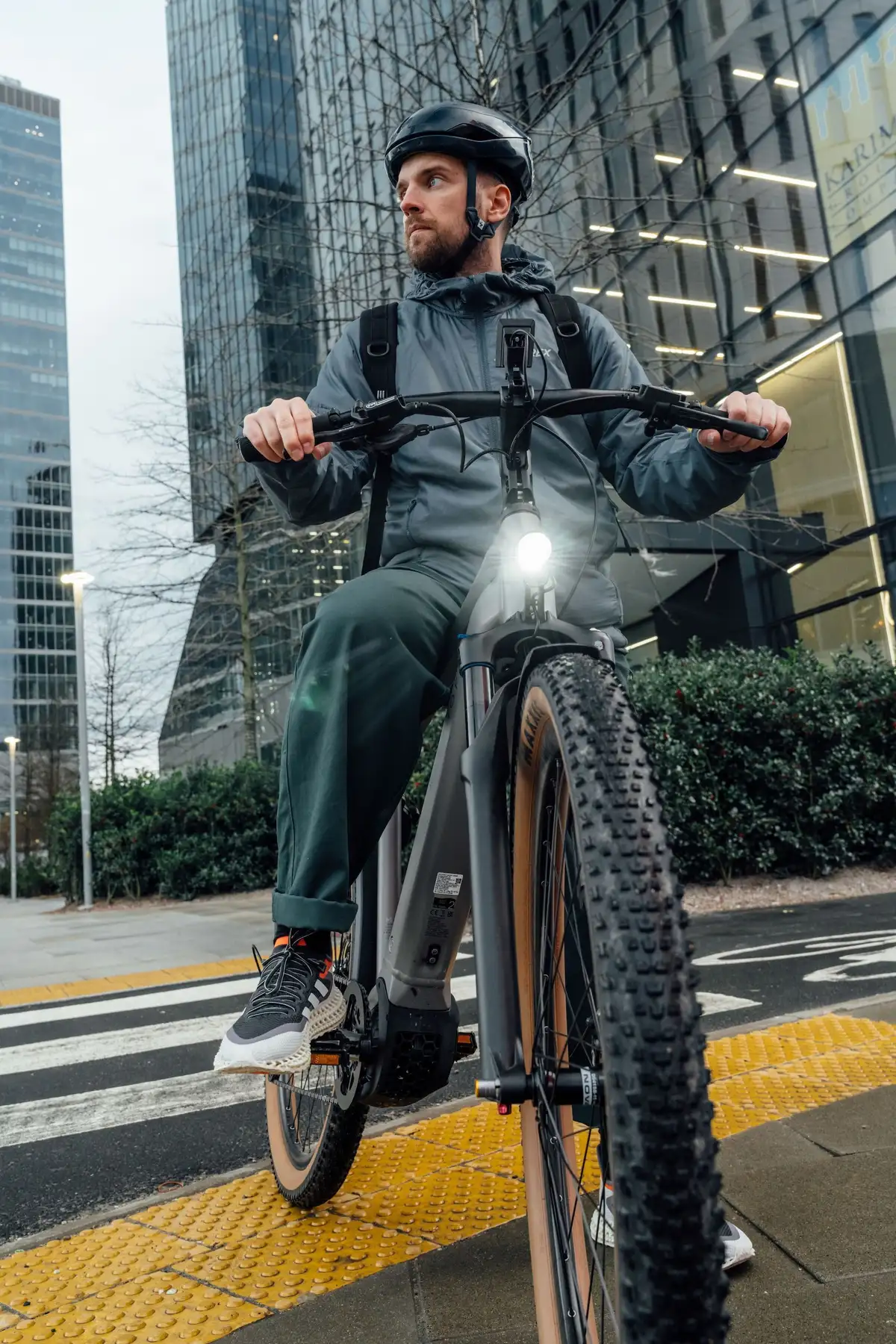
Company bike as a motivator
For healthy New Year's resolutions
But even though the cold winter months invite us to stay cozy indoors, it is especially important to incorporate exercise and fresh air into our daily routine. Company bikes offer the perfect solution. Employers can communicate these benefits to motivate their employees:
More exercise: Cycling to work replaces the often sedentary commute by car or public transportation. Even a short distance improves fitness, strengthens the immune system, and helps prevent typical winter ailments such as fatigue.
Reduce stress: Cycling is an ideal way to clear your head. Exercise in the fresh air – whether on the way to work or in your free time – promotes calmness and has been proven to reduce stress, which often builds up after the holidays or through everyday work.
Living sustainably: With a company bike, employees make a positive contribution to climate protection right at the start of the year. Every kilometer traveled by bike saves CO₂ and reduces your ecological footprint – a resolution that brings great added value both individually and socially.
Measures for employers to facilitate winter commuting
Making safety visible: light, reflection, rules
In winter, the feeling of safety often determines whether someone gets on their bike or not. That's why it's worth communicating a clear “winter standard”: functioning front and rear lights, reflectors or reflective elements on clothing/bags, and highly visible accessories. If you like, you can prepare a short internal checklist (“Am I winter-ready?”) and offer a light test day or a small “visibility campaign” in your company, for example.
Organize a winter check: Maintenance as a service rather than an expense
Brakes, lights, tire pressure, chain – in winter, these basics simply have to be right. An organized winter check (on site with a mobile workshop or via partner dealers) relieves employees of most of the technical stress. Workshops – for example, on caring for e-bike batteries in winter – are also an option. This increases usage because it eliminates uncertainty (“What if something doesn't work?”). A fixed date in January, combined with bookable time slots, is a suitable format.
Offer accessory support: small budget, big impact
Many employees don't cycle because they don't have the right equipment – or because they're not sure what they really need. A small subsidy, voucher, or discounted accessory package can make a surprising difference here. Typical winter game changers include warm gloves, rain pants, overshoes, buffs, reflective elements, and a good waterproof jacket.
Focus on tires and grip: make slippery roads less dangerous
Slippery roads are a real motivation killer. Employers can help here primarily by providing information and options: Which tires are best for wet roads? When is it worth having more tread? In regions with regular ice or snow, the topic of studded tires can also be seriously addressed—not to cause fear, but as helpful guidance.
Improve infrastructure: arrive, dry off, change clothes
Anyone who arrives at the office wet or sweaty needs solutions—otherwise, convenience will win out in the end. Often, small measures are enough: a designated drying area (e.g., a clothes horse or drying room), secure storage facilities, lockers, or an area where clothes and helmets can dry. If showers or changing rooms are available, this should be actively communicated in winter—many people are unaware that this option exists.
Allow for flexible hours: to avoid darkness and rush hour
If work processes allow, flexibility can be a real lever in winter. Even 30 to 60 minutes of leeway in working hours helps many employees to cycle during daylight hours or avoid the busiest traffic times. This increases their sense of safety—and lowers the mental hurdle of getting on their bikes in the first place.
Motivation through community: challenges instead of appeals
“Please cycle more” rarely works. What does work is a common goal with a low barrier to entry. Formats such as “10 commuting days in January,” “winter kilometers as a team,” or “every ride counts—no matter how short” create a sense of belonging, routine, and conversation topics. It is important to have a fair system that also includes short distances and different fitness levels—and focuses on recognition rather than pressure to perform.
Communication that is realistic—and provides concrete help
The introduction of company bikes at the beginning of the year sends a strong signal: the company is committed to a sustainable, future-oriented work culture. Companies can also launch New Year's promotions where new employees pick up their company bikes and start using them – a clear kick-off for an active start to the new year. Sharing success stories is particularly effective in this context: testimonials from employees who actively use their bikes in winter motivate others and create identification. When colleagues are seen cycling even in winter, the company bike becomes more than just a benefit – it becomes an integral part of the corporate culture.
A campaign for winter
Examples of New Year's challenges with service bikes
Motivation grows when it is supported by community and small goals. Employers can launch winter campaigns to encourage employees to cycle even in the cold season:

Collect winter kilometers
Teams or departments can organize mileage competitions in which the distances traveled are documented. Companies can offer mileage bonuses (e.g., donations to charitable organizations) or small rewards for distances achieved.

Winter workshop for bike maintenance
A workshop on bicycle maintenance during the cold season can motivate employees to prepare their bikes well for winter. The company can invite experts to give tips on winter-proof equipment, maintenance, and safe riding techniques in winter.

Group activities
Organized bike tours or winter “commuter get-togethers” promote interaction among colleagues and strengthen team spirit.

Cycling Wellness Day
An additional incentive could be a “cycling wellness day,” where employees meet up with their company bikes after work at a special destination—such as a spa, gym, or wellness center that has agreed on a special offer with the employer in advance. This combines cycling with relaxation and fitness.
Conclusion
Company bikes as a year-round win-win solution
Company bikes are much more than a summer trend – they offer companies the opportunity to support their teams in a sustainable way, even in winter. By offering targeted incentives, practical assistance, and inspiring campaigns, employers can not only boost employee motivation, but also achieve their own health and sustainability goals.
The key is to view company bikes as a year-round win-win solution – for fit, committed employees and a more sustainable corporate culture. In short: make wintertime an opportunity to get your team fit, active, and sustainable for the new year!