E-mountain bikes explained
What is an e-mountain bike? And what can it do? This article explains everything you need to know about areas of application, model types, and more—plus tips on e-MTB leasing.
The most important points at a glance.
E-mountain bikes combine the off-road capabilities of classic mountain bikes with electric assistance – for even more fun on the trail.
E-mountain bikes have particularly powerful motors that are specifically designed for off-road use.
Thanks to the motor assistance, they are suitable for a much wider target group than classic mountain bikes.
E-mountain bikes are basically divided into e-MTB hardtails and e-MTB full-suspension bikes. Depending on the intended use, there are different e-MTB categories such as light e-MTB, all-mountain, downhill, enduro, SUV e-bike, and cross-country.
You can lease an e-mountain bike through providers such as Lease a Bike – with tax benefits and service packages.
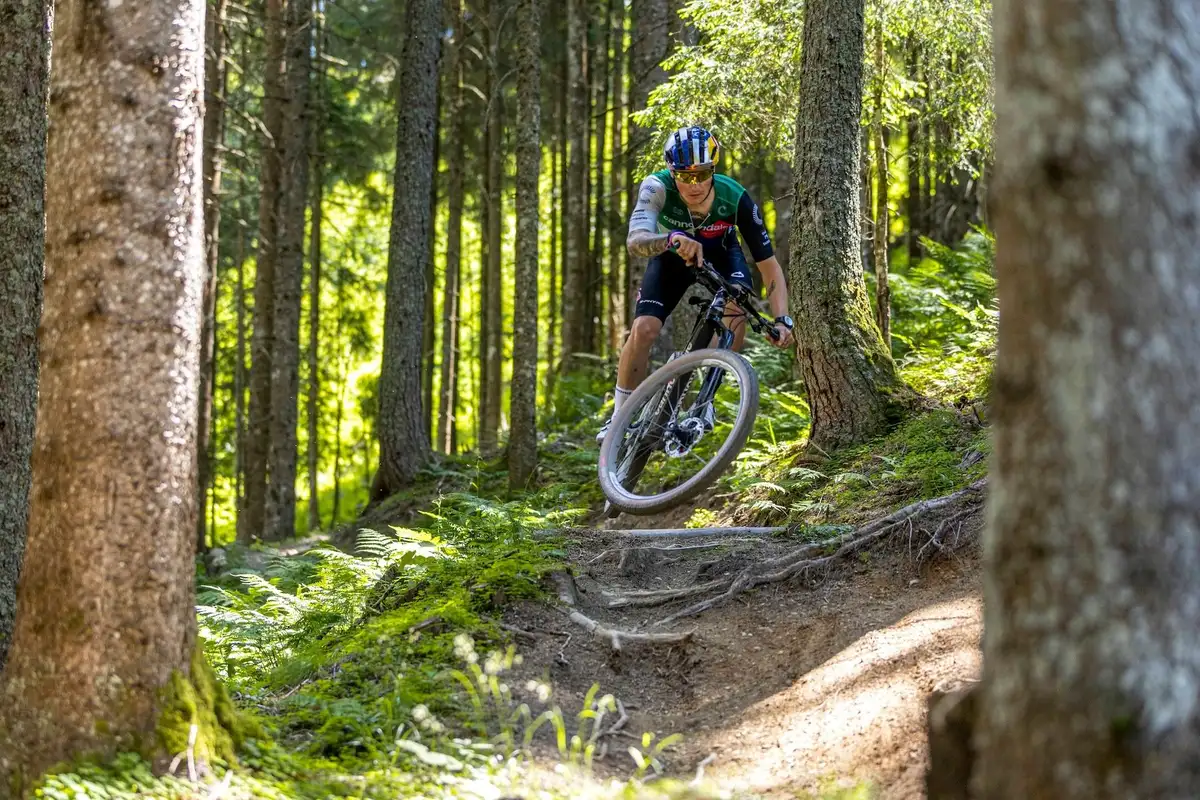
The trail climbs steeply up the slope, the sun glitters through the trees – and yet you just keep pedaling, supported by the quiet whirring of the motor. No burning legs, no struggle against the mountain, just flow. That's exactly what makes e-mountain bikes so appealing. With their combination of powerful drive, robust technology, and classic mountain bike features, they are perfectly suited to all kinds of off-road adventures – whether on alpine single trails, forest paths, or after-work rides.
But what exactly makes e-mountain bikes so special? What different models are available? And which model is best suited to which target group? The following guide summarizes everything – including tips for e-mountain bike leasing.
What is an e-mountain bike?
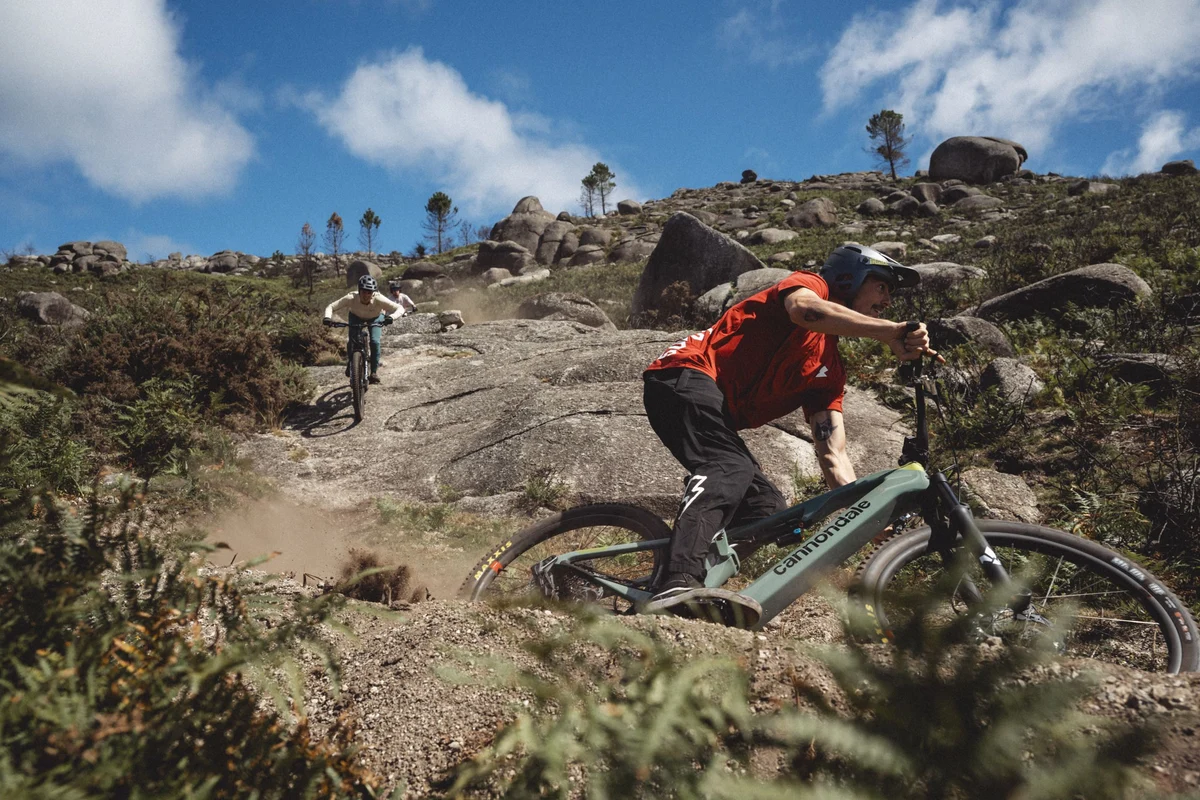
An e-mountain bike – or e-MTB for short – is an electrically assisted mountain bike that combines the robust construction of classic mountain bikes with the additional power of an electric motor. This makes steep climbs, longer distances, or technically demanding trails much easier to tackle. As with a classic e-bike, the drive assists pedaling up to a speed of 25 km/h. Depending on the model and motor characteristics, the assistance is harmonious and finely tuned, so that the natural riding feel of a mountain bike is retained – only with noticeably more range, comfort, and control off-road.
Typical features of an e-mountain bike are:
Electric motors with torques of up to 100 Nm
Batteries with a capacity of up to 800 Wh for ranges of over 100 km.
MTB setup with front suspension (hardtail) or front and rear suspension (full suspension).
Suspension systems with 100 to 180 mm travel – depending on the model and intended use.
Wide, profiled tires for maximum grip
Disc brakes for safe braking performance on descents
E-mountain bike vs. mountain bike: These are the differences.
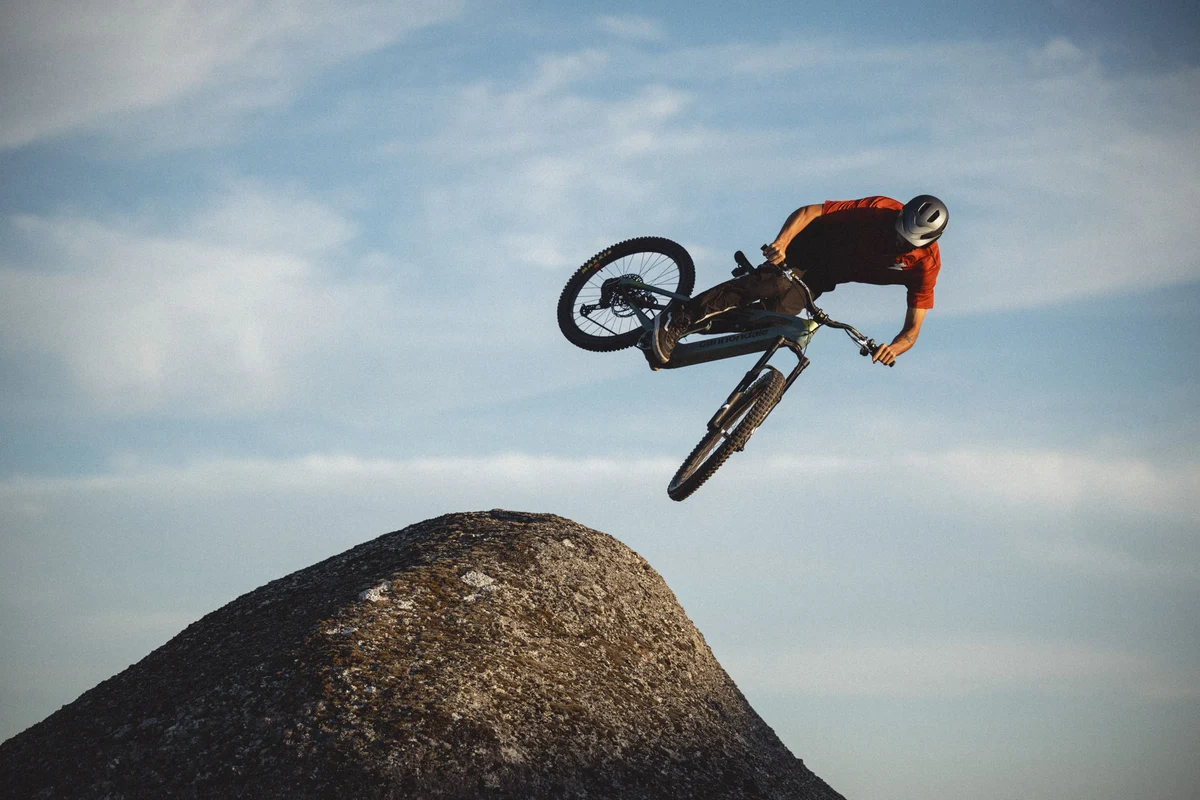
At first glance, e-mountain bikes and classic mountain bikes look very similar – both are robust, sporty, and built for off-road adventures. However, the key difference lies inside: an additional motor transforms the e-MTB into an all-rounder for longer tours and steep climbs. While every meter of elevation gain on a classic mountain bike requires pure muscle power, the electric assistance on an e-MTB provides additional endurance and new possibilities.
The following overview shows how the two bike types differ in terms of technology, handling, and area of use—and which model is the better choice for whom.
Electric mountain bike
Drive: Electric motor with pedal assistance up to 25 km/h
Range: 60–150 km (depending on battery, riding style, terrain)
Weight: 16–26 kg
Riding characteristics: Provides assistance on inclines and long distances
Target group: Athletes, touring enthusiasts, commuters
Area of use: Trails, mountains, forest paths, everyday use
Price: €2,500–€10,000
Mountain bike
Drive: Muscle power
Range: Unlimited, but depends on strength
Weight: 8–18 kg
Handling: More effort required
Target group: Sporty enthusiasts, racers
Area of use: Trails, mountains, races
Price: €800–€7,000
These types of e-mountain bikes and areas of use are available.
Not all e-mountain bikes are the same.
The models differ significantly depending on the area of application, terrain, and personal riding style. Whether for light cross-country rides, extended tours, or demanding trail descents: there is a suitable concept for every purpose. Basically, there are two main categories—hardtails and full-suspension bikes.
Hardtail e-MTB – light, direct, efficient
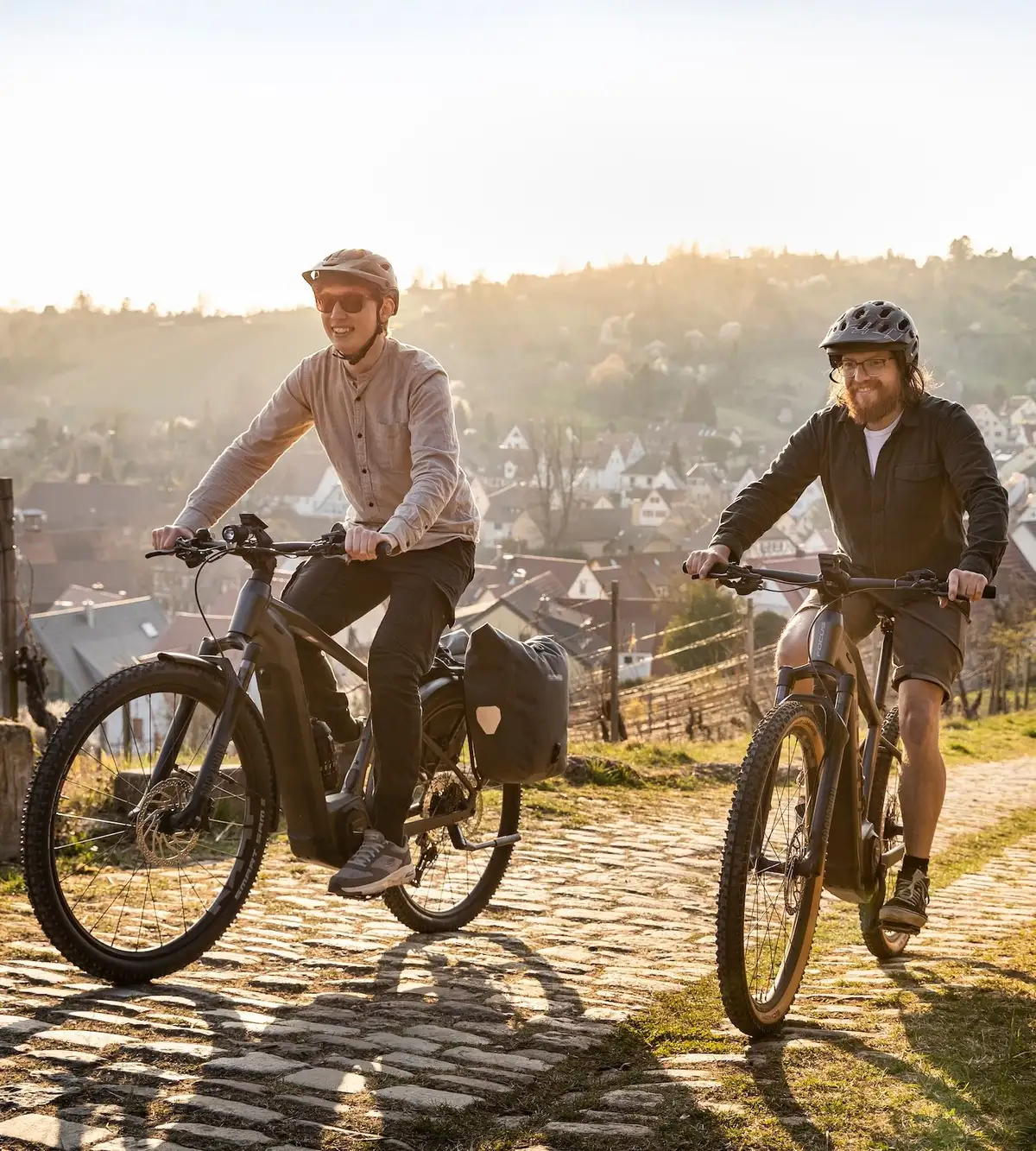
Hardtails have a suspension fork at the front but no rear suspension. This makes them lighter, easier to maintain, and usually cheaper. They are ideal for beginners, touring cyclists, and commuters who often ride on forest and gravel paths but also want to venture off-road on easy terrain from time to time.
Fully E-MTB – Comfort and control off-road
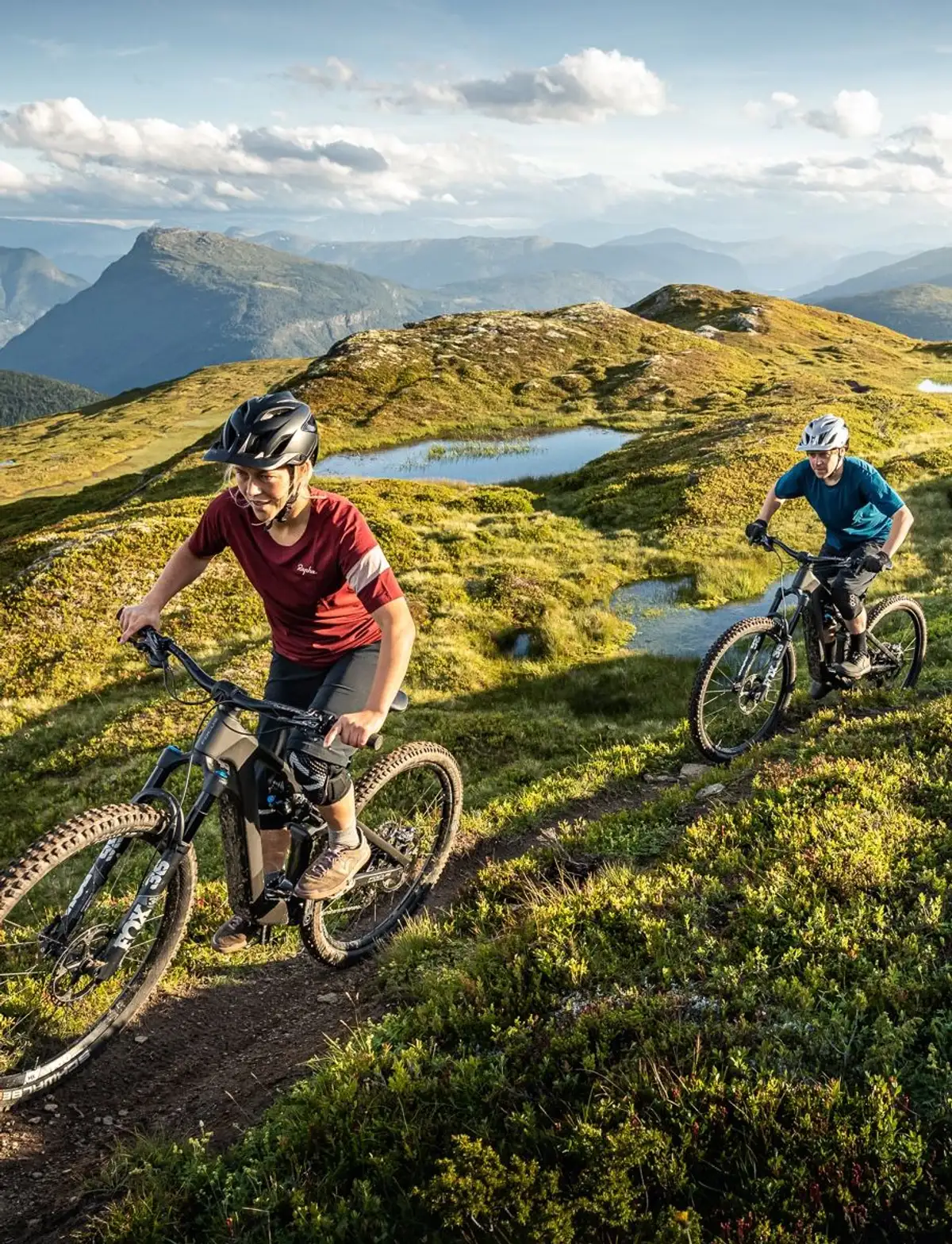
A full-suspension e-MTB (fully) offers front and rear suspension, ensuring optimal traction, stability, and comfort—especially on technical trails or long tours. These bikes appeal to sporty riders who are looking for maximum control and a genuine mountain bike feel with motor assistance.
In detail, e-MTBs can be further divided into different categories:
Cross-country e-MTB
Lightweight, efficient, and designed for speed. Ideal for athletic riders who want to cover long distances on mixed terrain. Thanks to its stiff suspension and low weight, it's perfect for uphill sections and marathon tours.
Touring e-MTB
Designed for comfort and endurance. With moderate suspension travel and a balanced seating position, these models are ideal for day trips or weekend excursions. Large batteries provide long ranges, while luggage options make longer rides easier.
All-Mountain-E-MTB
The versatile all-rounder among e-MTBs. With around 140–150 mm of suspension travel, it can handle both steep climbs and challenging descents. Compared to touring e-MTBs, all-mountain bikes are designed to be a little sportier. Perfect for riders who enjoy varied trails.
Enduro-E-MTB
Built for sporty riders who want to get the most out of downhill riding. With up to 170 mm of suspension travel, a robust chassis, and a powerful motor, it is ideal for demanding trails and bike park use.
SUV-E-Bike
A combination of e-MTB and trekking bike. With a robust frame, wide tires, and additional features such as mudguards and luggage racks, the SUV e-bike is perfect for everyday use, commuting, and weekend tours—sporty and practical at the same time.
Light-E-MTB
The newest category among e-mountain bikes. With a smaller battery and reduced motor weight, it brings back the natural riding feel of a classic mountain bike—for anyone who rides sportily but doesn't want to forego subtle assistance.
Downhill-E-MTB
Maximum stability and suspension travel up to 200 mm – the downhill e-MTB is made for rough terrain. Control at high speeds on steep descents is what counts here. Thanks to motor assistance, you can then ride back up the hill without a shuttle or lift.
Children's e-MTBs – extra power for little adventurers.
There are now special e-mountain bikes for children too. Children's e-MTBs are designed for smaller body sizes and lower weights, but have the same technical features as adult models – including a motor, battery, and robust off-road tires. The electric assistance helps young riders master longer tours with their parents or tackle more challenging routes.
E-mountain bike drives at a glance.
The motor is the heart of every e-mountain bike – it determines power, riding experience, and range. Depending on the system, performance, weight, and characteristics vary significantly. From powerful all-round drives to ultra-light sports systems: this overview shows the most important motors in the e-MTB sector and their special features.
Buying an e-mountain bike: Seven steps to finding the right e-MTB.
Our overview shows that finding the right e-mountain bike is now easier—and at the same time more complex—than ever before. The selection ranges from lightweight cross-country models and comfortable touring bikes to high-end enduro bikes with over 100 Nm of torque. If you know what's important, you'll quickly find the perfect bike for off-road riding, everyday use, or leisure. The following seven steps will help you find your way around.
Define the area of application
Whether it's your daily commute, a leisurely forest ride, or a steep alpine trail, the terrain determines your choice of e-MTB. A hardtail is usually sufficient for gravel and forest trails, while a full-suspension bike with longer travel is recommended for demanding trails or bike park use.
Compare motor power and battery capacity
Powerful motors with up to 100 Nm of torque or more deliver constant thrust even on steep climbs. If you frequently ride long distances, you should opt for batteries with a capacity of 600 Wh or more. Light e-MTBs, on the other hand, offer less power but are noticeably lighter and more agile.
Check suspension travel and geometry
The suspension travel determines comfort and control: 100–130 mm for touring, 140–170 mm for all-mountain and enduro models, up to 200 mm for downhill e-MTBs. A more upright geometry ensures long-distance comfort, while a sporty posture provides greater agility.
Select frame material
Aluminum offers robustness and good value for money, while carbon frames score points for their low weight and stiffness. With intensive off-road use, the greater stability of a high-quality frame pays off in the long term.
Consider equipment and components
Disc brakes, tire tread, gears, and suspension are key quality features. Brand-name components from Shimano, SRAM, or RockShox guarantee precision, durability, and safety—especially at higher speeds and on long descents.
Plan your budget and financing realistically
epending on the features, e-mountain bikes cost between €2,500 and €10,000. An e-MTB lease—for example, through Lease a Bike—makes getting started much easier: predictable monthly payments, tax benefits, and optional comprehensive protection included.
Match size and ergonomics
A perfectly fitting bike is crucial for riding comfort and efficiency. An ergonomically adjusted seating position prevents strain and ensures better handling—especially on technical terrain. Our tip: Professional bike fitting at a specialist retailer is always worthwhile.
Lease an e-mountain bike with Lease a Bike: The smart alternative.
Leasing an e-mountain bike is a simple and cost-effective way to ride a high-quality bike without having to invest the full amount up front. Through providers such as Lease a Bike, both employees and companies benefit from financial advantages and practical services—ideal for anyone who regularly travels on two wheels, whether in everyday life or on the trail.
E-MTB leasing with Lease a Bike and its advantages at a glance:
Up to 40 percent cheaper than buying: Salary conversion reduces income tax and social security contributions, making E-MTB leasing particularly attractive, especially for high-quality models.
No high initial investment: Instead of paying several thousand euros at once, the e-mountain bike is conveniently paid off in fixed monthly installments. This creates financial planning security and provides access to top-of-the-line bikes that might otherwise be out of budget.
Worry-free riding with comprehensive protection: Service packages cover maintenance, repairs, and theft protection. This keeps the e-MTB in top condition – no matter how demanding the terrain.
Wide selection of brands and models: Whether you're looking for a sporty all-mountain bike, a robust enduro bike, or a lightweight e-MTB, Lease a Bike offers models from leading manufacturers such as Cube, Haibike, Specialized, Giant, and Trek.
Quick and easy online: The company sets up the leasing agreement, and you can conveniently choose your bike online or in a specialist store. In just a few steps, you can get your new e-MTB – hassle-free, digital, and without any paperwork.
Flexible at the end of the term: After 36 months, you have the choice: take over the bike, lease a new model, or simply return it. This means you always stay up to date with the latest technology and ride the right e-mountain bike at all times.
Ready for the next adventure?
Then it's time for an e-mountain bike.
E-mountain bikes take the thrill of mountain biking to a whole new level. They combine power, technology, and freedom like no other bike - opening up completely new possibilities for experiencing mountains, trails, and tours. Whether it's a sporty after-work ride, an extended weekend tour, or your daily commute through the countryside, the e-MTB makes every route an adventure—regardless of your fitness level or riding skills.
Thanks to the wide variety of models – from lightweight hardtails and versatile all-mountain bikes to powerful enduro and downhill e-MTBs – everyone can find the right bike for their riding style and intended use.
Getting started is particularly easy with e-mountain bike leasing from Lease a Bike: high-quality brand models, significant tax savings, and a comprehensive protection package that covers maintenance and safety. This makes e-mountain biking not only a sporting pleasure, but also a smart one. In short: the next trail is waiting – and with an e-MTB from Lease a Bike, getting there has never been easier.