


What is a company bike lease?
Company bicycle leasing means that the employer leases a bicycle or e-bike and makes it available to the employee for both personal and business use. The lease payment is deducted from the employee’s gross salary through salary conversion—which saves on taxes and social security contributions. Only a small monetary benefit of 0.25 percent of the list price is subject to taxation. This allows employees to get the bike of their choice at a significantly lower cost than if they were to buy it outright.
The most important information at a glance.
What is a company bike lease? The employer leases a bike and makes it available to employees. The bike can be used for both personal and business purposes.
How do I pay? Through payroll deduction from your gross salary; in some cases, with an employer subsidy.
How much do I save? Compared to buying the bike outright, you can save up to 30–40%, depending on the model.
How is it taxed? Only 0.25% of the list price per month is taxed as a taxable benefit.
How long is the contract? Typically 36 months (three years).
What happens afterward? You can either buy the bike or return it. Afterward, you can lease a new bike.
Who can lease a bike? Employees subject to social security contributions whose employer offers this program.

What exactly is a company bike lease?
Work bike leasing is an employee benefit in which the employer leases a bicycle or e-bike through a leasing provider and makes it available to employees for their use. The lease agreement is between the employer and the leasing company—not between the users and the provider. In practice: The user is allowed to ride the bike for personal use without restriction—not just for commuting to work.
This model is often referred to as a “job bike,” “company bike,” or “bike leasing”—all terms that mean the same thing. The key difference from a traditional private purchase lies in the financing: With company bike leasing, the monthly lease payment is deducted directly from the employee’s gross salary. The savings thus result directly from lower taxes and fees.
How does company bike leasing work, step by step?
In practice, the process is straightforward and almost always follows the same pattern:


Choose a bike
If the company in question already offers bicycle leasing as an employee benefit, employees can choose the bike of their choice directly from a participating retailer—from city bikes to gravel bikes to cargo bikes.
Request a quote
You will receive a lease offer that includes the monthly payment, lease term, and benefits (e.g., theft and damage coverage, service packages for inspections and wear and tear).
The employer reviews and approves
The employer enters into an individual lease agreement with the leasing provider and arranges for the employee to use the vehicle.
Salary deferral begins
The lease payment is deducted from your gross salary each month. Any employer contribution reduces your share of the payment.
Ride a bike
Employees use the bicycle for both personal and business purposes—typically for 36 months.
End of contract
Employees can keep the bike or return it. Afterward, they can start with a new contract.
What do “salary conversion” and the “0.25 percent rule” mean?
Salary conversion means that the employee forgoes a portion of their gross salary equal to the lease payment—and that is precisely what reduces the tax and social security burden. Since portions of the gross salary are considered non-cash compensation, the gross salary subject to social security contributions decreases. In effect, you are paying part of the lease payment with money that would otherwise have gone to the tax office and social security funds.
Important: Personal use of the bicycle is a taxable benefit in kind—but the tax liability is minimal. Since 2019, the so-called 0.25 percent rule has applied to company bicycles and e-bikes: Each month, 0.25 percent of the list price—rounded up to the nearest 100 euros—is treated as a benefit in kind. For company cars with internal combustion engines, the rate is four times as high. Unlike with company cars, there is no additional taxation for the commute to work—private and commuting trips are covered by the taxable benefit.
By the way: If the employer fully finances the bike in addition to the salary (as a salary supplement rather than through a deferred compensation plan), the taxable benefit is not subject to taxation at all.
Who is eligible to lease a company bike?
Generally, employees subject to social security contributions whose employers offer the company bike program are eligible to lease a bike. Salary conversion requires a corresponding gross salary. For this reason, mini-jobs are generally not permitted—nor are apprentices with very low pay or employees in their probationary period (this is determined by the respective employer).
Civil servants, municipal employees, and employees covered by collective bargaining agreements can also participate in many cases—provided their employer has made the program available. In some industries, company bike leasing is now even regulated by collective bargaining agreements. Important: Self-employed individuals use a different model, as they do not convert a portion of their salary. However, since the lease payment can also be claimed as a business expense for tax purposes, there are corresponding tax benefits here as well.
Which bikes can I lease?
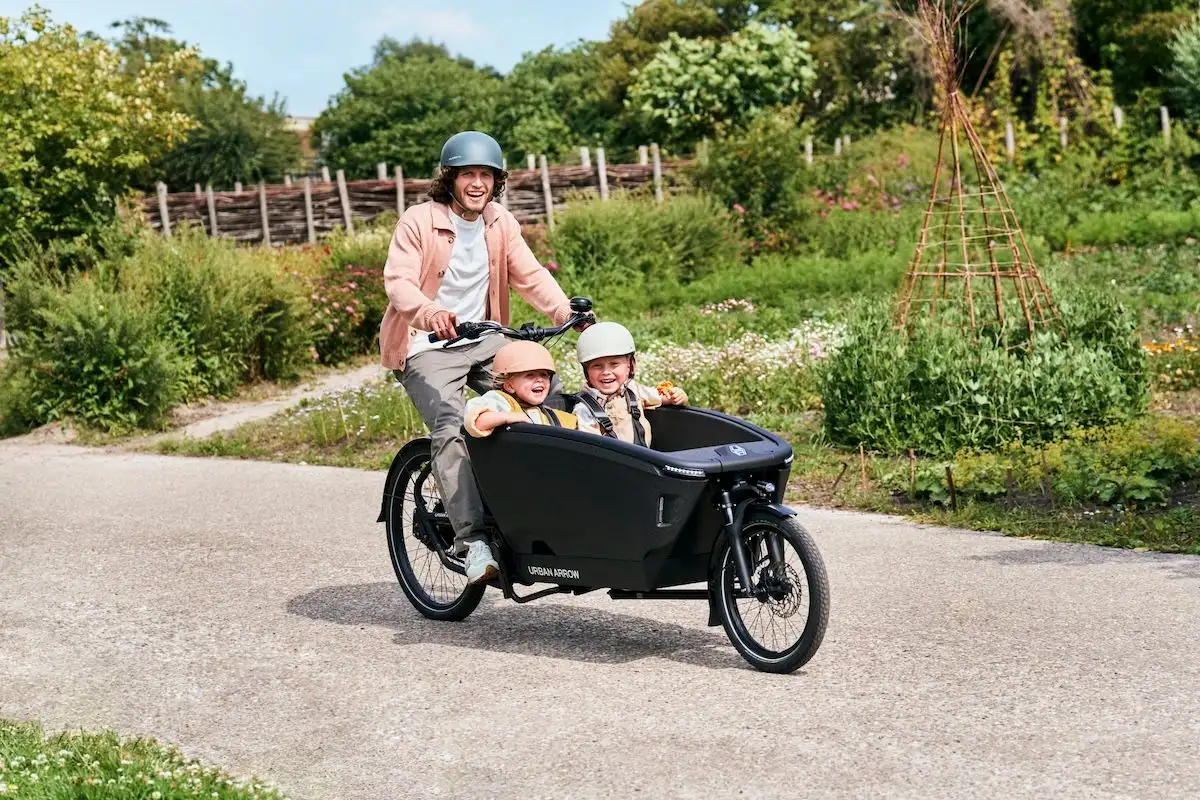
Employees can lease almost any type of bike: city and trekking bikes, road bikes, gravel and mountain bikes, cargo bikes, as well as e-bikes and pedelecs. From a cycling perspective, this model is particularly attractive for high-end e-bikes, because that’s where the tax benefit is greatest—after all, a good commuter pedelec can easily cost between 3,000 and 5,000 euros.
It’s important to distinguish between the different drive systems: Pedelecs with motor assistance up to 25 km/h are classified as bicycles under traffic law, and the monetary benefit covers everything in this case. S-pedelecs up to 45 km/h, on the other hand, are classified as motor vehicles. They require a license plate and a driver’s license. Since S-pedelecs are treated for tax purposes like electric company cars, the commute to work must also be taxed for them. While the one-quarter valuation rule also applies to personal use, the trip to the primary place of work is additionally factored in. This changes the calculation—S-pedelecs therefore often do not carry the same weight as classic e-bikes in company bike leasing programs.
What happens when the lease expires?
After 36 months, employees have two options: purchase the bike or return it. At Lease a Bike, we check in a timely manner whether a purchase offer is possible and send it via email no later than three months before the contract ends. If the employee decides to purchase the bike, ownership transfers to them upon payment. If the employee does not wish to keep it, we’ll conveniently pick it up. Afterward, a new contract for the next bike can be started directly using the existing order code.
A tax note regarding purchase: After three years, the tax authorities assume a flat residual value of 40 percent of the original manufacturer’s suggested retail price. If the purchase price is lower than this, the difference may constitute a taxable benefit. At Lease a Bike, Lease a Bike Deutschland GmbH handles this taxation in accordance with Section 37b of the German Income Tax Act (EStG)—therefore, users incur no additional tax costs.

Checklist: Is a company bike lease right for me?
Does my employer even offer this program?
Do I expect to stay with the company for the next 36 months?
Is my employment status eligible? (Minijobs are usually not eligible.)
Do I want to buy the bike at the end? If so, keep in mind that the exact purchase price won’t be determined until shortly before the end of the program.
Are insurance and service included in the offer?

Our author
Anna Veldtrup
Anna Veldtrup has been a team leader in the Customer Service and Claims Management department at Lease a Bike since 2024, and she and her team work every day to ensure the highest level of customer satisfaction and smooth operations. She loves nothing more than riding her gravel bike in nature.