Cargo bike safety: How to ride safely with a child and cargo
How safe is a cargo bike, really? Find out what matters when it comes to brakes, stability, and riding technique—including tips for riding with a child.
The most important points at a glance.
The design determines how the bike handles, as single-track, three-wheeled, and longtail models react completely differently.
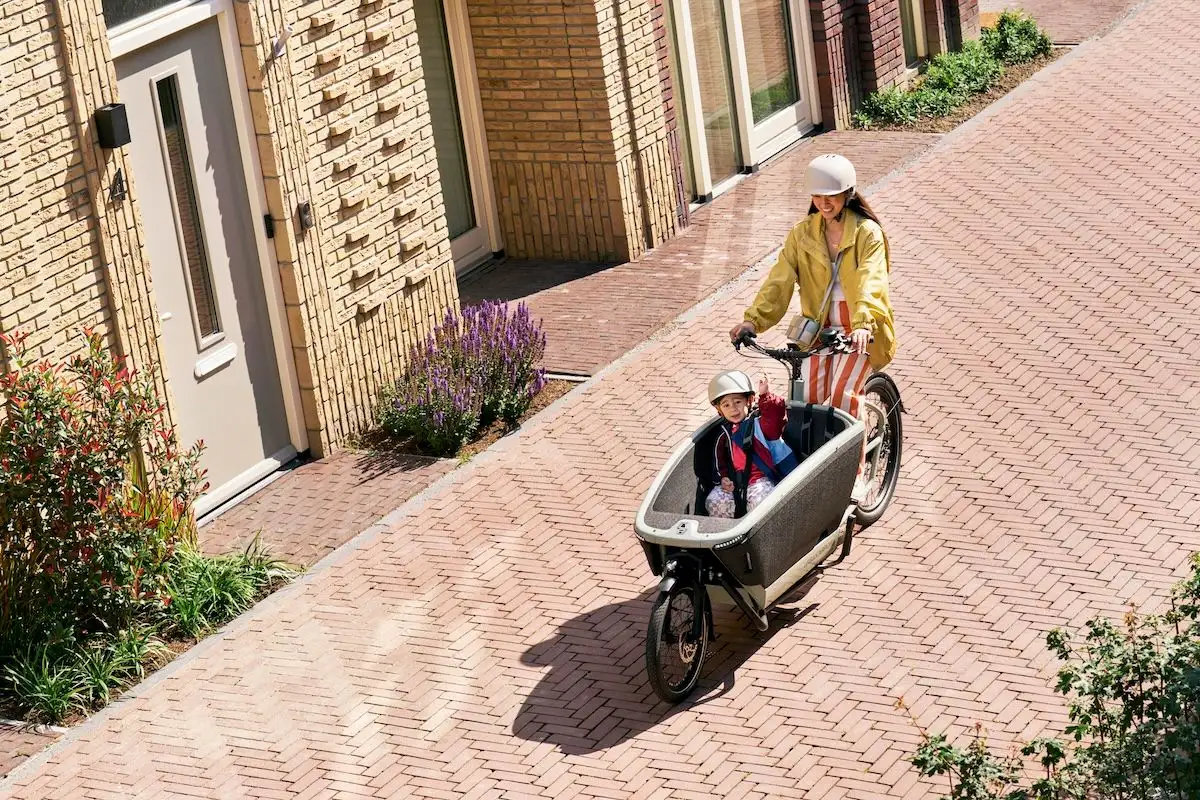
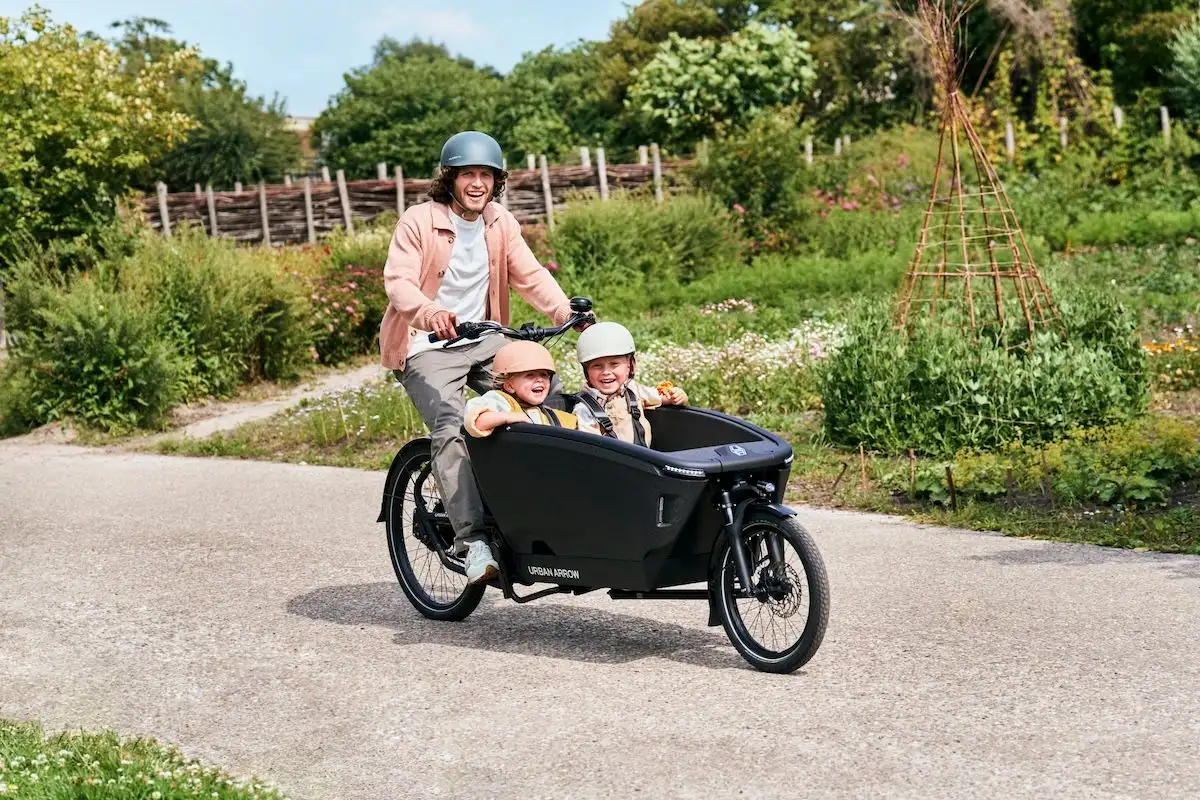
Each child riding along needs their own seat with a safety belt system.
Helmets and safety belts are not required by law on cargo bikes, but they are essential for safety.
The European standard EN 17860 replaces the previous DIN 79010 and tests, among other things, rollover stability and braking performance.
The most common cargo bike accident is a single-vehicle accident involving no third parties.
Before taking your first ride with a child, you should go through a practice phase, both with and without a load.
Whether it’s taking the kids to daycare, doing the weekly grocery shopping, or heading to the hardware store—for many families, the cargo bike has now replaced the second car. That’s exactly why it’s worth taking a closer look at cargo bike safety, because a loaded cargo bike brakes, steers, and tips differently than a regular bicycle. The big question: How safe is a cargo bike, really? What matters when it comes to brakes, stability, and child safety features? In this article, we’ll show you how different designs handle, how to properly secure your child, and how to identify a safe model.
An overview of the cargo bike trend.
The cargo bike is no longer a niche product. According to the latest market data from the German industry association ZIV – Die Fahrradindustrie, 220,300 cargo bikes were sold in Germany in 2025, about 84 percent of which were electric. Since 2015, the association has recorded total sales of more than one million electric cargo bikes.
However, as cargo bikes become more widespread, the debate over safety is also intensifying. For example, in its 2024 study on transporting children by bicycle, the German Insurers’ Accident Research Institute (UDV) found that one in two children riding in a cargo bike does so without a helmet, and one-third are either not buckled in at all or are not buckled in correctly. The ZIV did, however, dispute the generalization regarding inadequate safety and pointed to 222 reported bicycle accidents involving children as passengers in 2022—most of which resulted in minor injuries. Both sides agree on one point, however: equipment, safety measures, and riding practices make all the difference when it comes to cargo bike safety.
Why cargo bikes handle differently - and what the risks are.
A fully loaded cargo bike can easily weigh between 60 and 100 kilograms. This weight noticeably increases the braking distance, makes the bike less responsive when swerving, and alters its steering behavior. Three-wheeled models without tilt technology do not lean into turns; instead, they drift outward and can tip over if traveling too fast. The turning radius is also a factor: In ADAC tests, even the most maneuverable three-wheeled model required just under five meters. The fact that, according to the UDV, the most common cargo bike accident is a single-vehicle accident fits this picture—most incidents involve rider error, not collisions with third parties.
Comparison of design types
Design | Handling | Seats for Children | Typical Applications |
Long John (single-track, front box) | Bicycle-like, but sluggish steering; long wheelbase | 1–2 | Commuting, the trip to daycare, city traffic |
Three-wheeled bike without tilt mechanism | Does not lean into turns; tends to tip over at high speeds | 2–4 | Short distances, heavy payload |
Three-wheeled bike with tilt mechanism | takes the curve, much more steadily | 2 | Families, hilly terrain |
Longtail (extended rear end) | most similar to a regular bike, agile | 1–2 | Crowded cities, limited parking space |
Compact Loader | Short and lightweight, lower payload | 1 | Shopping, short distances |
Securing a child in a cargo bike: seat, seat belt, helmet.
The most important rule is: Every child needs their own, permanently installed seat with a restraint system. A three- or five-point harness keeps the child secured in the seat during an emergency stop, and a high backrest supports the head and upper body. Seat shells with side head protection and energy-absorbing material offer additional protection. Be sure to include a bicycle helmet in the transport box as well, because if the box tips over on its side, the head could hit the ground. Also, make sure that legs and feet do not come near the wheels and that no loose items are left unsecured inside the box.
Checklist Before Every Ride
Check seat belts: taut, properly fastened, no twisted straps.
Check helmets: sit level, chin strap one finger’s width loose.
Check cargo: adhere to the manufacturer’s specified gross vehicle weight limit.
Secure the load: Secure groceries behind or next to the child seats.
Brakes and tire pressure: Perform a quick function test; inflate tires to the manufacturer’s specifications.
Lights: Check lights and reflectors before every ride at dusk.
What the StVO requires - and what it doesn't.
According to Section 21(3) of the German Road Traffic Regulations (StVO), passengers may be carried on bicycles only by persons at least 16 years of age, provided the bicycle is designed and equipped for carrying passengers. For children up to and including the age of seven, special seats and effective spoke guards are required. However, the regulation does not include any specific technical requirements for cargo bikes—the UDV (Insurers’ Accident Research) refers to this as a regulatory gap. There is also no requirement to wear a seatbelt or helmet on a cargo bike. Safety authorities and manufacturers unanimously recommend both.
Riding a cargo bike safely: Riding techniques for everyday use.
Anyone getting a new cargo bike should first practice in an empty parking lot—first without a load, then with weight in the cargo box, before taking children along. It’s a good idea to practice slalom, tight turns, starting on a hill, and emergency stops from about 20 km/h to realistically assess the longer stopping distance.
When driving, keep the following in mind:
Always remember to brake early, approach curves at a reduced speed, and cross curbs at a right angle whenever possible.
Also good to know: Braking distance increases further in wet conditions, on leaves, or in snow.
Three-wheeled models are sensitive to ruts and railroad tracks.
The kickstand also deserves attention: Children should only get on or off the bike once it is securely parked.
A tip: Regular maintenance of the brakes, tires, and drivetrain noticeably improves safety.
Which brands offer safe cargo bikes?
Many cargo bike buyers wonder whether some brands are safer than others. First things first: The brand alone says little about safety—verifiable criteria are what matter. Therefore, look for certification according to the European standard EN 17860, which has been gradually replacing the previous DIN 79010 since 2024 and tests, among other things, rollover stability, braking performance, stability when parked on a slope, and the ability to drive over curbs. Other features include hydraulic disc brakes, documented load limits, a sturdy double or single-axle stand, and seats with an integrated seat belt system.
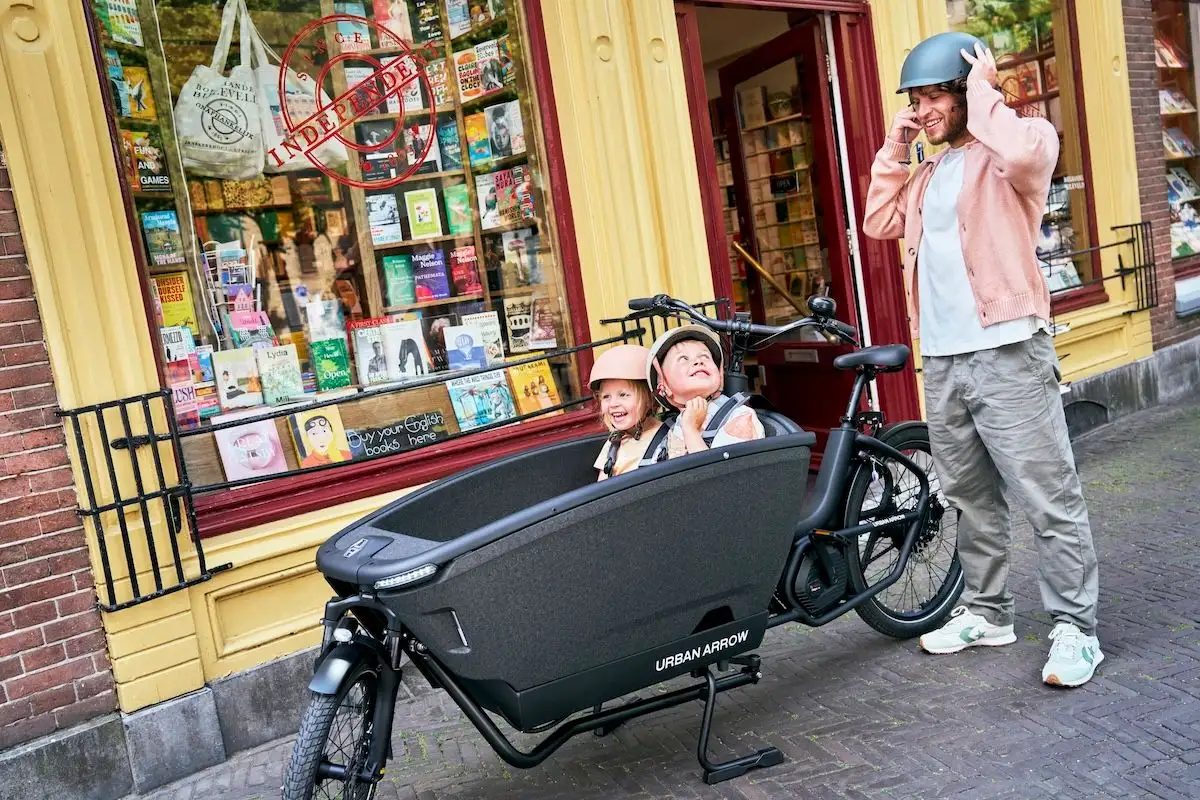
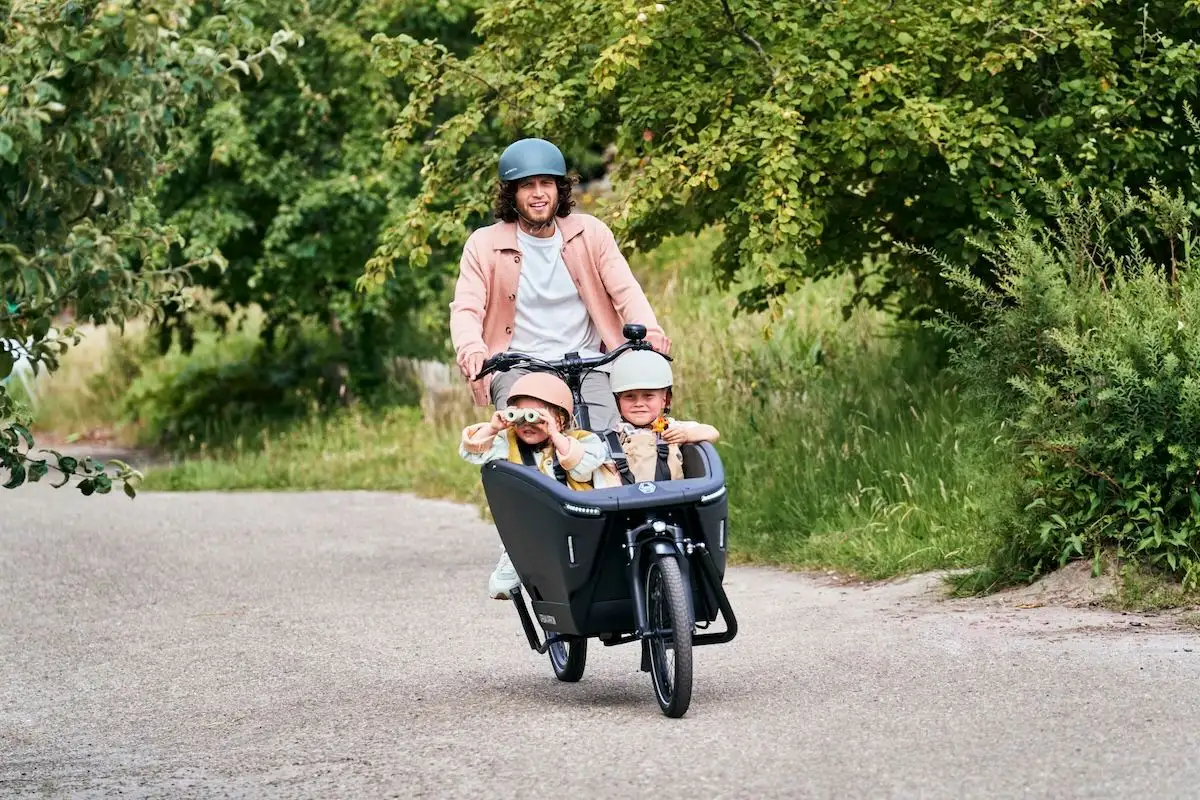
Well-established single-track models are available from Urban Arrow, Riese & Müller, Muli, and Tern, among others, while three-wheeled bikes with tilt technology are offered by Chike, Butchers & Bicycles, and Ca Go, for example. Interesting fact: In ADAC tests, models with tilting technology performed best in terms of handling, while an affordable entry-level model failed to meet the required minimum braking deceleration. Those who prefer a child trailer to a cargo bike will find its safety cage to be a good alternative—according to the UDV, a child secured with a seatbelt inside it will not touch the ground even in the event of a rollover.
Important: In the end, riding safely is less a matter of price than it is of the right combination of design, proper safety measures, and skilled riding. If you test-ride your cargo bike before buying it, know its maximum weight capacity, and consistently make sure your children are buckled in and wearing helmets, you’ll significantly reduce the risk. And after a few weeks of getting used to it, the riding experience—which takes some getting used to—will quickly become the most relaxing part of the trip to daycare.