S-Pedelec explained
What is an S-pedelec? And what can it do? In this article, you will learn everything about areas of application, model types, and differences from e-bikes—plus tips on S-pedelec leasing.
The most important information at a glance.
S-pedelecs (speed pedelecs) offer motor assistance up to 45 km/h, making them the ideal choice for commuters who want to cover longer distances quickly and efficiently.
Unlike conventional e-bikes, S-pedelecs are legally classified as mopeds. This means that insurance plates, mirrors, and an operating license are mandatory.
Thanks to their high speed, they are a real alternative to cars, as even distances of over 20 kilometers can be covered without extreme time loss or excessive sweating.
To operate them, you must have at least a class AM (scooter) driver's license and wear a suitable helmet. In addition, bike paths outside of town may usually only be used with the appropriate approval.
Through providers such as Lease a Bike, S-pedelecs can be conveniently leased as company bikes – including tax advantages through the 0.25% rule and comprehensive service packages.
The traffic light turns green, a quick push on the pedals, and the city glides silently past you. While others are stuck in rush hour traffic or waiting for a delayed train, you glide effortlessly past the traffic jams on your S-Pedelec—at speeds of up to 45 km/h. This is precisely where the strength of fast pedelecs lies: they are significantly faster than classic bicycles, transforming the daily commute from a chore into a sporty but relaxed break in the fresh air.
But what technically distinguishes an S-pedelec from a normal e-bike? What legal regulations must be observed in road traffic, and why is it the ideal vehicle for long-distance commuters? This guide gives you a complete overview of the technology, rules, and advantages of S-pedelec leasing.
What is an s-pedelec?
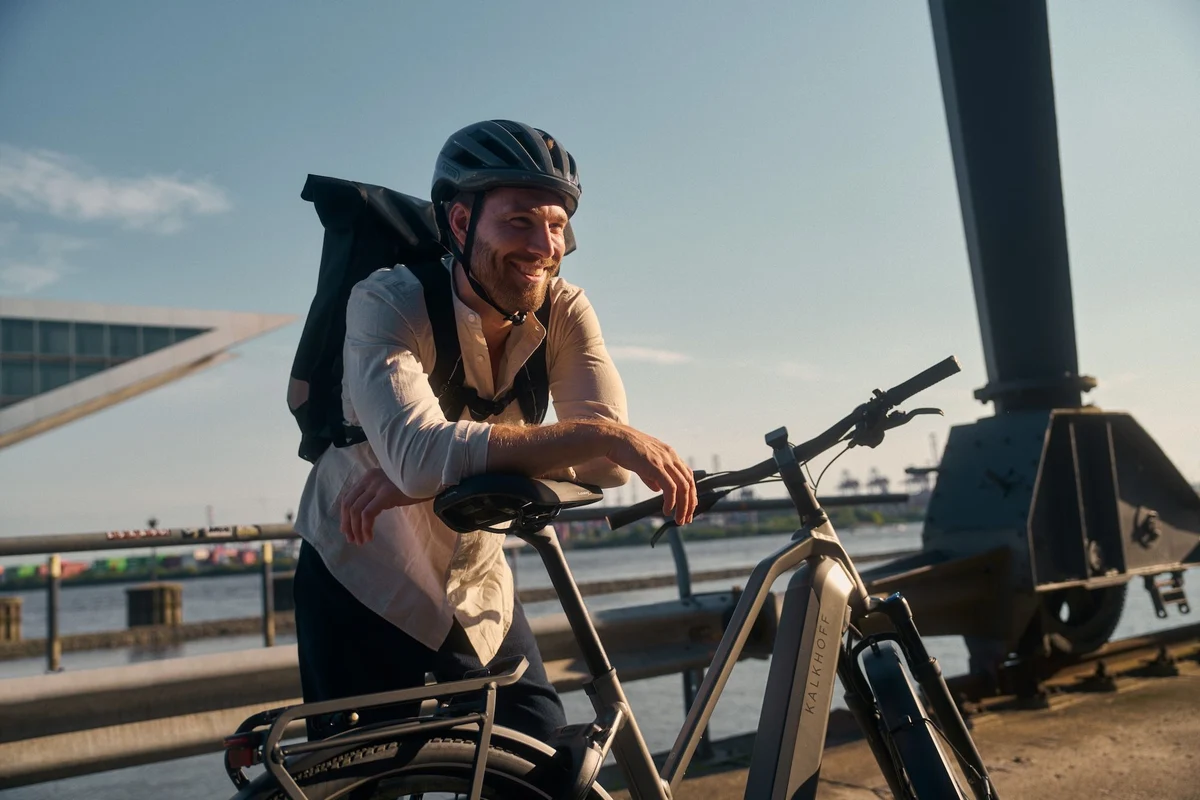
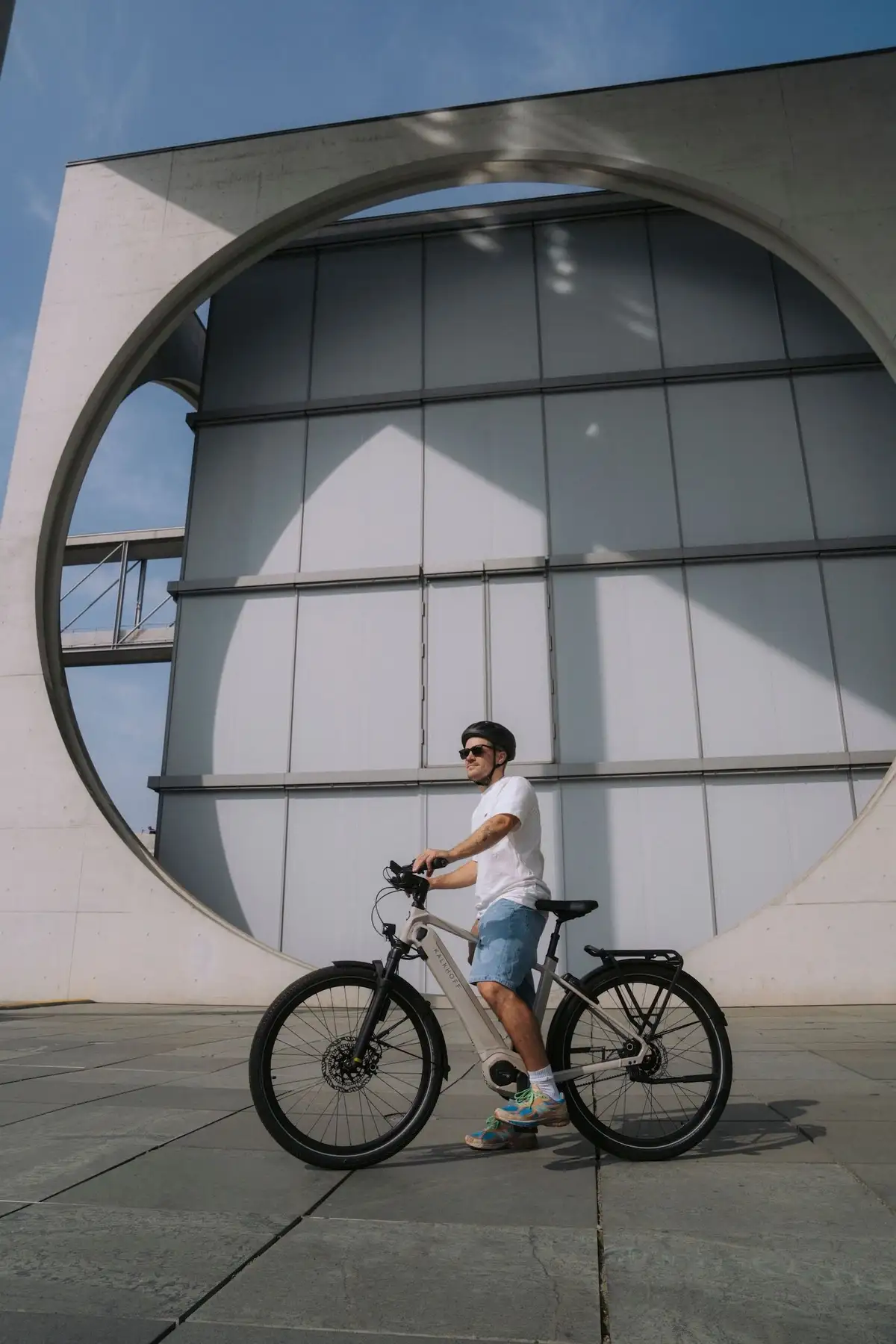
An S-pedelec (speed pedelec) is an electric bike that assists the rider with motor power up to a speed of 45 km/h. In comparison, a classic pedelec (i.e., a “normal” e-bike) reaches a maximum speed of 25 km/h. This higher speed brings with it a number of special features and legal requirements.
Typical features of an S-pedelec are:
Powerful motors: Drives with up to 500 watts (rated continuous power) and strong assistance that only cuts out at 45 km/h.
Large battery capacities: Frequent use of dual battery systems or batteries with 800 Wh to 1,000 Wh to compensate for the high load at high speeds.
Stable frame geometry: Reinforced frame constructions that are specially designed for the higher forces and stability at 45 km/h.
Components relevant for registration: Standard equipment with rearview mirror, license plate holder, and a permanently illuminated lighting system including brake light.
Specialized tires: Tires with a special rubber compound and approval (ECE-R75 test mark) that are optimized for high speeds and asphalt.
High-performance brake systems: Stable disc brakes designed to bring the bike to a safe and abrupt stop even at maximum speed.
Legal regulations for S-pedelecs.
S-pedelecs no longer fall into the category of bicycles, but are classified as mopeds. This means:
Insurance requirement: An S-pedelec requires an insurance license plate (similar to a moped), i.e., motor vehicle liability insurance.
Helmet requirement: Unlike normal pedelecs, wearing a helmet is required by law.
Driver's license: To ride an S-pedelec, you need at least an AM driver's license (moped license). A normal car driver's license (class B) also covers class AM.
Minimum age: The minimum age for riders is 16.
No use of bike paths: S-pedelecs may only be ridden on the road and not on bike paths, unless an additional sign explicitly permits this. One-way streets may only be ridden in the direction of traffic, even if the opposite direction is open to cyclists.
Other: No trailers may be attached to the bike, but child seats are permitted.
No start-up assist mode: On many S-pedelecs, the motor is only active when the pedals are pressed. A pure “gas mode” is not permitted on most models.
S-pedelec vs. classic e-bike: these are the differences.
At first glance, S-pedelecs and conventional e-bikes appear almost identical—both assist with pedaling and offer modern riding comfort. But the devil is in the details, or more precisely, in the software and legal classification: while a normal e-bike (pedelec) gently cuts off assistance at 25 km/h, an S-pedelec continues to provide powerful assistance up to 45 km/h. This transforms it from a bicycle into a motor vehicle.
This performance boost not only changes the range and commuting experience, but also brings with it specific rules for insurance, helmets, and route use. The following overview shows the most important differences in a direct comparison:
S-pedelec (Speed-Pedelec)
Maximum assistance: up to 45 km/h
Legal status: moped (L1e-B)
Registration: Insurance plate & operating license
Driver's license: Class AM (included in car driver's license)
Helmet requirement: Yes (suitable helmet according to ECE standard or NTA 8776)
Use of bike lanes: Generally prohibited (must use the road)
Target group: Long-distance commuters, people switching from cars
Blood alcohol limit: 0.5 per mille (same as for cars)
Price: approx. €4,000–12,000
Classic e-bike (Pedelec)
Maximum assistance: up to 25 km/h
Legal status: bicycle
Registration: not required
Driver's license: not required
Helmet requirement: no (but recommended)
Use of bike paths: Permitted and mandatory
Target group: Recreational cyclists, shoppers, occasional riders
Blood alcohol limit: 1.6 per mille (less if driving behavior is conspicuous)
Price: approx. €2,000–8,000
Advantages of s-pedelecs.
Higher speed
With assistance up to 45 km/h, the S-Pedelec is particularly attractive for longer commutes or for people who want to get from A to B quickly. You can travel much faster than with a normal bicycle or e-bike.
Lower environmental impact
For many commuters, the S-Pedelec is an attractive alternative to the car. It produces no direct emissions and thus helps to reduce environmental pollution.
Physical activity
Similar to a normal e-bike, you still have to pedal an S-pedelec. This stimulates your circulation and keeps you fit, while still providing motorized assistance.
Lower costs compared to cars
In terms of maintenance costs (insurance, servicing), an S-pedelec is significantly cheaper than a car. There are no fuel costs and wear and tear is often lower.
Disadvantages of s-pedelecs.
Legal restrictions
Due to its classification as a moped, the S-pedelec is subject to stricter regulations. The requirement to wear a helmet, have insurance, and obtain a driver's license limits its use for some people.
No use of bike paths
Since S-pedelecs are considered too fast for bike paths, they must be ridden on the road. This can be unpleasant, especially in cities where there is a lot of car traffic.
Higher acquisition costs
S-pedelecs are generally more expensive than normal e-bikes or bicycles. The technology that enables higher speeds is more complex and costs more.
Limited range
Depending on the battery capacity, the range may be limited, especially at higher speeds, which require more energy. On long journeys, the battery may need to be recharged more frequently.
S-Pedelec drives at a glance.
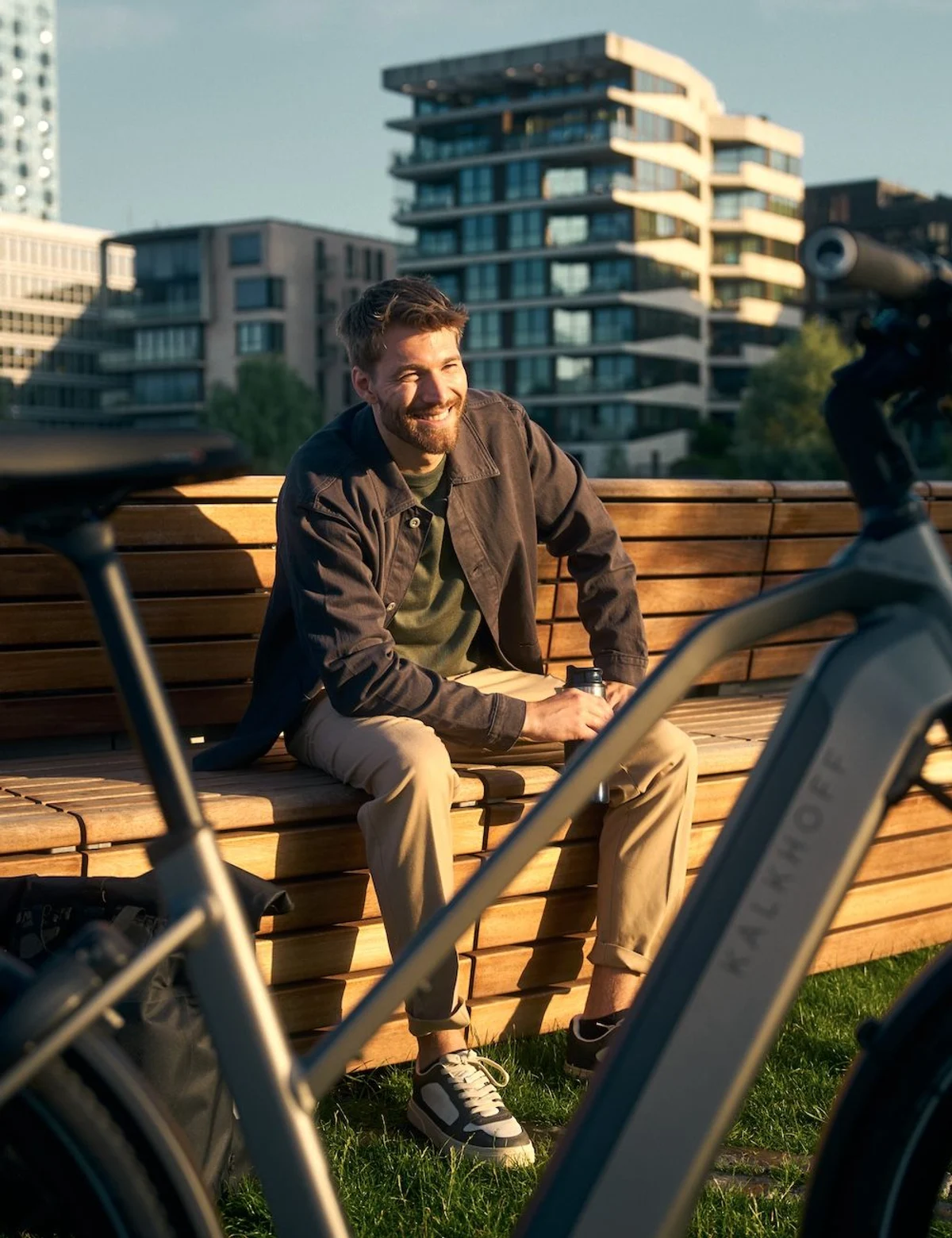
The drive is the heart of every S-pedelec. With speeds of up to 45 km/h, they provide more support than conventional e-bike systems and must reliably deliver higher continuous power. The following overview shows the most important systems currently available on the market in the speed pedelec segment – from classic mid-drive motors to advanced high-torque systems.
Bosch
Model: Performance Line Speed
Motor type: Mid-drive motor
Torque: Up to 85 Nm
Special features: Proven Speed drive, assists up to 45 km/h, smart system with connectivity and riding modes
Brose
Model: Drive S Mag (Speed)
Motor type: Mid-drive motor
Torque: Up to 90 N·m
Special features: Very quiet, direct riding experience, magnesium housing for low weight
Pinion
Model: MGU Speed
Motor type: Mid-motor (integrated gearbox)
Torque: up to 85 Nm
Special features: Combination of gearshift and motor, particularly low maintenance, ideal for commuter bikes
Stromer (Syno)
Model: SYNO Drive II
Motor type: Rear wheel hub motor
Torque: up to 44 Nm
Special features: Made for Stromer models, very quiet, high continuous speed, integrated recuperation system
Yamaha
Model: PWSeries S2 Speed
Motor type: Mid-drive motor
Torque: Up to 75 N·m
Special features: Compact, high cadence support, smooth start-up behavior
Neodrives
Model: Z20 RS
Motor type: Rear wheel hub motor
Torque: up to 40 Nm
Special features: Particularly smooth, silent direct drive, often used in commuter bikes
Who is an S-pedelec suitable for?
An S-pedelec is particularly suitable for people who commute long distances or want an alternative to a car. Especially in urban areas or conurbations where car traffic often comes to a standstill, an S-pedelec can be a quick and practical solution. It is an environmentally friendly alternative for commuters who have to cover long distances every day without wanting to sacrifice the flexibility and speed of a motorized vehicle.
However, those who prefer to ride comfortably on bike paths or want to use an e-bike purely for leisure will be better served by a normal pedelec.
Buying an S-Pedelec: Seven steps to finding the right e-MTB.
Finding an S-pedelec requires a different perspective than buying a normal bicycle. Since you'll be traveling at speeds of up to 45 km/h, range under heavy loads, stability, and legal requirements are key considerations. If you set the right priorities, an S-pedelec can be the perfect replacement for a second car. These seven steps will help you achieve your goal:
Analyze commute distance and terrain
How long is your commute and what is the terrain like? Efficient rear hub motors are ideal for flat asphalt roads. If you have to climb a lot of hills or ride on unpaved (but approved) farm roads, an S-pedelec with a mid-drive motor and suspension is the better choice.
Select motor concept: mid-motor vs. hub motor
Mid-drive motors (e.g., Bosch) use the gear shift and are powerful on hills. Rear hub motors (e.g., Stromer or Klever) excel with their tremendous acceleration on flat terrain, silent operation, and low wear on the chain and sprockets, as the power is applied directly to the rear wheel.
Calculate range at speed
Riding at 45 km/h consumes significantly more energy than riding at 25 km/h. Look for large batteries (often 800 Wh or more) or dual battery systems. As a rule of thumb, plan for a significantly shorter range with an S-pedelec than with a normal e-bike to ensure you arrive safely even in headwinds or cold weather.
Check legal obligations and equipment
An S-pedelec requires an operating license (CoC papers). Make sure that all components—from the mirror and horn to the license plate holder—are present. Lighting is also crucial: a high-quality headlight with a high beam function is a huge safety bonus when riding at dusk or in the dark.
Consider maintenance and wear
Due to the high speed and powerful motor forces, wear on brake pads and drive components is higher. Low-maintenance solutions such as a belt drive in combination with a gear shift (e.g., Pinion or Rohloff) are particularly attractive for year-round commuters.
Take advantage of budget and leasing benefits
S-pedelecs are technologically advanced and usually cost between €4,000 and €12,000. This is where leasing (e.g., via Lease a Bike) really comes into its own: thanks to the 0.25% rule and the fact that the cost is offset against gross salary, this fast bike is often more attractive financially than a small used car.
Testing ergonomics and safety
At 45 km/h, vibrations and bumps are much more noticeable. A suspension seat post or high-quality suspension fork are not a luxury, but serve to improve riding safety. During a test ride, be sure to check the braking performance and stability of the frame at top speed—nothing should wobble.
Lease an S-Pedelec with Lease a Bike: The smart alternative.
Leasing an S-pedelec is the smartest way to revolutionize your daily commute without having to bear the high purchase costs of a premium bike all at once. Since S-pedelecs are more technologically sophisticated and therefore more expensive, leasing through Lease a Bike offers enormous savings. It is the ideal solution for anyone who wants to leave their car at home more often and is looking for a real high-speed alternative for long distances.
S-pedelec leasing with Lease a Bike and its advantages at a glance:
Up to 40 percent cheaper than buying outright: Salary conversion means employees save significantly on income tax and social security contributions. This tax advantage is particularly noticeable for S-Pedelecs worth €6,000 or more.
Preserve liquidity without a down payment: Instead of investing a large sum immediately, you can conveniently pay for the S-Pedelec via your monthly payroll. This gives you access to high-end models from premium manufacturers that would otherwise be beyond your budget.
Worry-free commuting with comprehensive insurance: Since an S-pedelec is exposed to high stresses in everyday use, integrated service packages are worth their weight in gold. Maintenance, wear and tear repairs, and comprehensive theft protection ensure that your commuter bike is always ready for use.
Top brands for long distances: Whether it's Swiss precision from Stromer, innovations from Klever, or smart systems from Riese & Müller and Specialized – via Lease a Bike gives you access to the best S-pedelecs on the market.
Simple digital processing: Your employer activates the portal, you choose your S-pedelec from a specialist dealer, and the rest is handled digitally. You can get your new company vehicle quickly and easily, without any bureaucratic hassle.
Always up to date with the latest technology: Batteries and motors are developing rapidly. After the 36-month term, you can simply return the bike and switch to the latest model with even more range and speed.
Conclusion.
Time savings and driving pleasure redefined.
The S-Pedelec is much more than just a fast bike—it is a highly efficient commuting tool that bridges the gap between conventional e-bikes and cars. For those who travel between 15 and 40 kilometers every day, it offers a solution that trades time lost in traffic jams for exercise in the fresh air. Thanks to powerful motors and modern battery technology, reaching 45 km/h is effortless, with a constant flow that gets you to your destination in a relaxed manner.
Although the legal framework and purchase costs are slightly higher, attractive leasing models make even the most premium bikes financially accessible. Those who value quality, safety, and strong service are not only investing in a vehicle, but also in quality of life and genuine flexibility. This takes the fear out of rush hour traffic, and while others wait in frustration, you can enjoy the moment when the light turns green and you silently pass the line of cars.