


E-trekking bike explained
What is an e-trekking bike? This article explains everything about features, range, costs, and differences compared to city and SUV e-bikes—plus tips on company bike leasing.
The most important points at a glance.
At 31.3 percent, the trekking bike is the largest model category in the German bicycle market; among e-bikes, it ranks second with 24 percent.
An e-trekking bike combines a riding position suitable for touring with full StVZO compliance and a drivetrain designed for efficiency.
Typical specifications include 50 to 85 Nm of torque, batteries ranging from 500 to 750 Wh, tire widths from 40 to 55 millimeters, and a weight of 22 to 28 kilograms.
Realistic ranges fall between 60 and 140 kilometers - depending on terrain, load, temperature, and assist level.
Hub gears and belt drives reduce maintenance requirements, while derailleur gears offer a wider range of gear ratios for climbing.
Through the company bike leasing program with payroll deduction, a trekking e-bike can cost up to 40 percent less than if purchased outright.
The e-trekking bike is the quiet market leader among bicycles in Germany - more understated than the e-mountain bike, more versatile than the city bike, and for years the top choice for commuting and touring. Market data from the 2025 Bicycle Industry Report by the industry association ZIV – The Bicycle Industry – illustrates just how central this category is: When bicycles and e-bikes are combined, the trekking bike, at 31.3 percent, is by far the largest model group - ahead of the mountain bike at 21.4 percent and the city bike at 16.6 percent. In the e-bike segment, e-trekking bikes accounted for 24 percent of all sales in the 2025 season. That corresponds to approximately 468,000 units out of total sales of about two million e-bikes. Only e-mountain bikes surpassed this figure, at 38 percent.
But why are trekking bikes so popular? What exactly defines an e-trekking bike? And where do they differ from city and SUV e-bikes? In the following overview, we’ll highlight the technical features, key equipment choices, typical uses, and terms for company bike leasing.
What is a trekking e-bike?
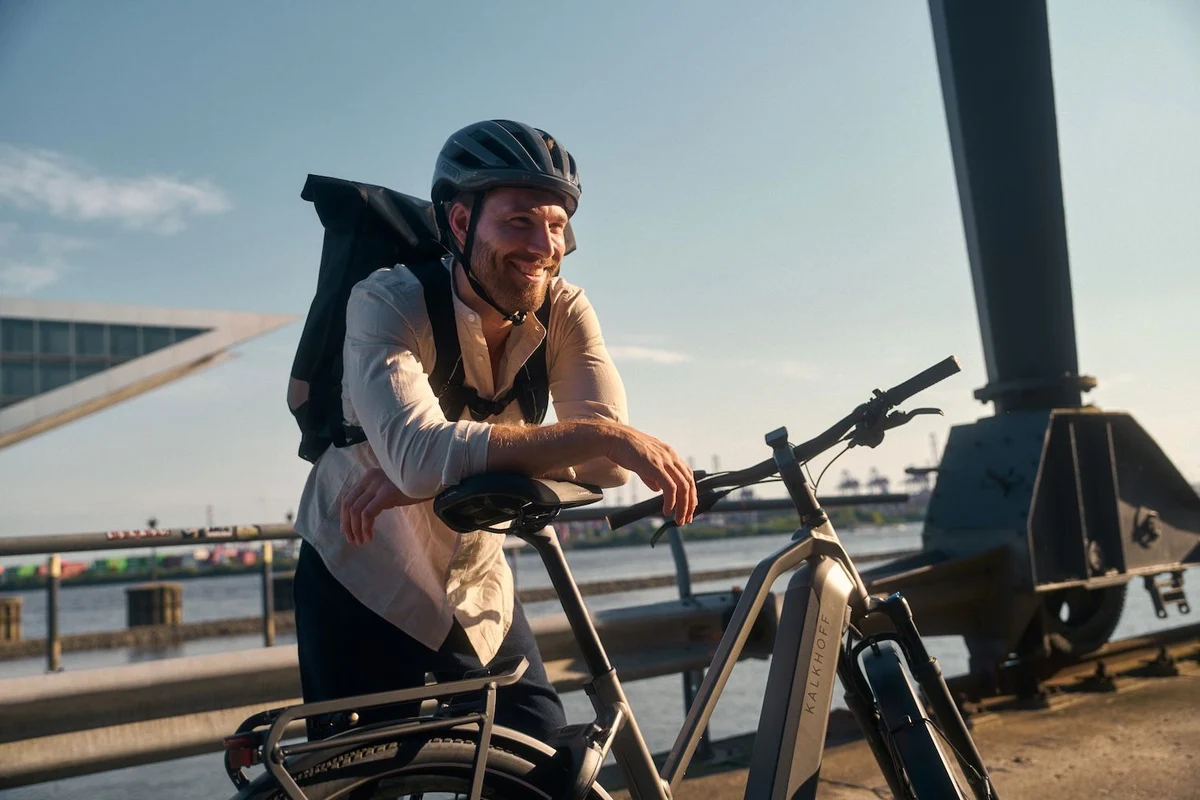
An e-trekking bike is an electrically assisted bicycle designed for everyday use and touring, with a focus on efficiency, comfort, and weather resistance. It is characterized by a slightly forward-leaning but largely upright riding position. It also features 28-inch wheels, relatively narrow, low-rolling-resistance tires, and a full set of equipment in compliance with the StVZO. The motor provides assistance up to 25 km/h at a maximum continuous rated power of 250 watts—legally, this classifies it as a bicycle under § 1(3) of the StVG, not as a motor vehicle.
The difference from an e-city bike lies in its design for longer distances. The trekking e-bike offers greater relief from pressure on the seat thanks to the more upright riding position, a wider gear ratio range, sturdier wheels, and greater load-carrying capacity for panniers. The difference from the e-mountain bike lies in the priority - the trekking bike optimizes rolling resistance and energy efficiency rather than off-road capability.
Good to know: Most manufacturers offer this category in two frame variants: as a diamond or trapezoid frame with a top tube, and as a wave or low-step frame with a steeply sloping top tube. The second variant makes getting on and off the bike considerably easier, which is a safety consideration in city traffic given the bike’s weight of around 25 kilograms.
The typical features of a trekking e-bike are:
Mid-drive motor with moderate torque: 50 to 85 Nm is sufficient for commuting, carrying luggage, and typical inclines, and consumes less energy than an MTB drive.
Battery between 500 and 800 Wh: usually integrated into the down tube, sometimes removable for charging at home.
Low-rolling-resistance tires: 40 to 55 millimeters wide with a flat tread pattern and puncture-resistant insert provide good all-around performance.
Suspension fork with 50 to 80 millimeters of travel: enough for cobblestones and farm roads, lighter than an MTB fork. Sportier models are also available with rigid forks.
Full StVZO equipment: lighting system with parking light, fenders, chain guard, luggage rack, kickstand, bell, and reflectors
Pannier rack with system mount: MIK or Racktime standards allow for tool-free attachment and removal of bags, baskets, and child seats.
Hydraulic disc brakes: These are standard in this category.
E-trekking bike, city e-bike, or SUV e-bike: Here are the differences.
The three categories for everyday use differ less in terms of the motor than in seating position, tires, and suspension design. Simply put: The e-city bike is optimized for short trips and good visibility; the e-trekking bike is optimized for medium to long distances on paved paths; and the SUV e-bike is optimized for varying terrain. The following overview clarifies the distinctions.
E-trekking bike
Seating position: slightly forward-leaning, suitable for touring
Tire width: 40–55 mm, low rolling resistance
Suspension: 50–80 mm front, some models with rigid fork
Torque: 50–85 Nm
Weight: 22–28 kg
Range: 60–140 km
Uses: Commuting, day trips, bike tours
Strength: Efficiency over long distances
Price: approx. €2,500–6,000
E-city bike
Seating position: upright, city-oriented
Tire width: 42–55 mm, comfort-oriented
Suspension: 40–63 mm or rigid fork
Torque: 40–75 Nm
Weight: 22–30 kg
Range: 40–90 km
Intended use: City streets, shopping, short distances
Strengths: Handling and ease of use
Price: approx. 2,000–5,000 €
SUV e-bike
Riding position: moderately sporty, upright
Tire width: 2.2–2.6” with knobby tread
Suspension: 100–150 mm, hardtail or full-suspension
Torque: 75–100 Nm
Weight: 24–30 kg
Range: 50–110 km
Usage: Road, gravel, forest trails
Strength: Performance on varied terrain
Price: approx. 3,500–8,000 €
Good to know: The lines between the categories are blurred, and many manufacturers fill in the gaps with their own designations, such as “cross,” “urban,” or “touring” bikes. A simple rule of thumb can help you decide: If your typical single trip is less than ten kilometers and takes you mainly through the city, a city e-bike will suffice. If the distance is between ten and thirty kilometers on bike paths, roads, and paved farm roads, an e-trekking bike is the most efficient choice. If the terrain regularly shifts to gravel and forest trails, it’s worth considering an SUV e-bike.
Who should consider an e-trekking bike?
The category is intentionally broad, which makes it appealing for a variety of uses:
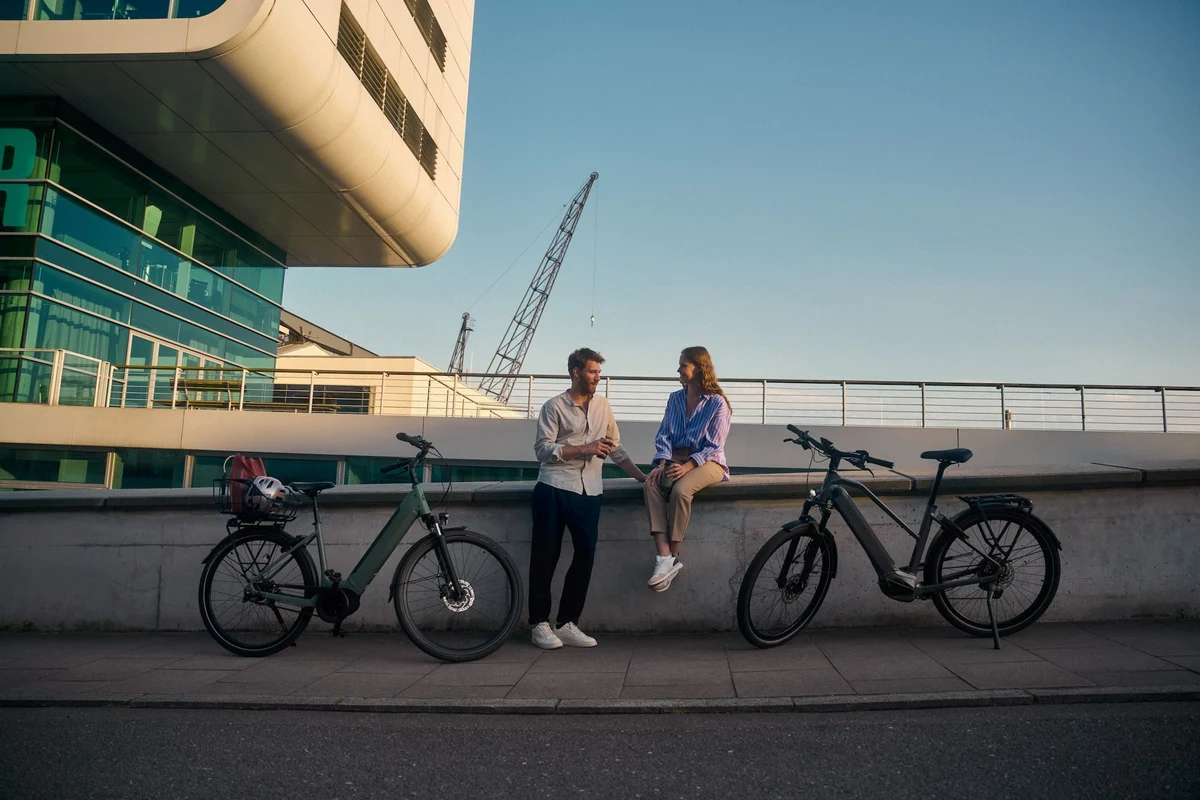
Commutes between 5 and 30 kilometers: The bike’s efficient design really shines here, without compromising comfort or practicality for everyday use.
Multimodal commuting: When combining the bike with train or bus travel, durability, good lighting, and a reliable locking system are key.
Shopping and errands: Integrated luggage racks, high load capacity, and sturdy wheels make weekly shopping trips possible.
Weekend day trips: A range of 60 to 140 kilometers covers most excursions, even those with elevation gains.
Bike tours with luggage: With front and rear panniers and a second battery, an e-trekking bike is suitable for multi-day tours.
Getting back into cycling after a long break: The motor assistance takes the strain out of climbs and headwinds, and the upright riding position is easy on the back.
This category is less suitable if the routes regularly take you over gravel, roots, and forest trails - it lacks sufficient tire volume and suspension travel. There are also more suitable bike types for sporty riding off paved paths or for very short city trips with many stops.
Features that make a difference in everyday life.
For a bike that’s used frequently but not well-maintained, the features determine how much maintenance is required. The following features are particularly important for an e-trekking bike:
Drive
Either with an internal hub gear system with a belt drive (low-maintenance, clean, and durable) or a derailleur system (lighter, more efficient, and with a wider gear range, which makes a difference on longer climbs and when carrying luggage)
Luggage carrier system
Make sure the system mount complies with the MIK or Racktime standard and check the maximum load capacity, which is typically between 18 and 27 kilograms.
Child seat approval
Not every luggage rack is approved for use with child seats. The approval information is listed in the owner's manual and is binding.
Tires with puncture protection
A tire with reinforced plies adds just a few hundred grams to rolling resistance, but saves you from having to make repairs on the side of the road—a significant advantage when the bike weighs 25 kilograms.
Lighting
A minimum of 10 lux is required. For unlit bike paths, 70 to 100 lux with a high-beam function is significantly more comfortable.
Display and operation
A removable display mounted separately on the handlebars is more theft-resistant than a permanently installed one; integrated systems, on the other hand, are more weather-resistant.
Motor, battery, and range of an e-trekking bike.
The mid-drive motor is standard in this category. It’s mounted at the bottom bracket, keeps the center of gravity low and centered, and can be combined with both hub and derailleur shifting systems. Rear-drive motors, on the other hand, are found in more affordable models. They’re lighter and quieter, but they shift the center of gravity backward and don’t allow for a coaster brake when used with hub shifting systems.
When it comes to torque, more isn’t automatically better. A powerful drive system with 85 Nm provides noticeably stronger traction on hills, but also consumes more energy at the same assistance level. For flat to slightly undulating terrain without a heavy load, 50 to 65 Nm is sufficient and more range-efficient. Lightweight systems with around 55 Nm are gaining importance in this category because they save several kilograms in weight and provide a more natural riding experience.
Important: Battery capacity should be based on the longest route you regularly ride, not on the longest possible trip. Depending on the model, an additional battery adds two to three kilograms of extra weight.
Leasing an e-trekking bike: Costs, term, and tax benefits.
A well-equipped e-trekking bike costs between 2,500 and 6,000 euros. With the Dienstrad leasing program, this amount shifts from a one-time investment to a fixed monthly payment. The mechanism involves payroll deduction: The employer signs the lease agreement, and the payment is deducted from the employee’s gross salary. This reduces income tax and social security contributions - depending on your income and tax bracket, leasing can be up to 40 percent cheaper than a direct purchase.
Good to know: With Lease a Bike, you can lease your e-trekking bike with a free choice of models. You decide on the brand, frame shape, battery size, and drivetrain configuration yourself. Advice and assembly are provided at the specialty shop of your choice within the network of partner dealers in Germany. The comprehensive protection plan includes an inspection and wear-and-tear budget that covers maintenance as well as the replacement of brake pads, chains, tires, and other wear-and-tear parts - items that need regular replacement on a bike used daily for commuting. Additionally, the plan provides coverage in the event of theft or damage. Also important: The Europe-wide mobility guarantee with 24/7 roadside assistance also applies to bike trips abroad.
Conclusion: The trekking e-bike is the obvious choice for everyday use.
The touring-friendly riding position, features suitable for everyday use, sufficient range, and the ability to carry luggage all make the trekking e-bike a bike that meets a wide variety of needs. This brings us full circle to the question posed at the beginning: Why is the trekking bike, of all things, so successful? The answer is simple: Because for many people, it offers exactly the middle ground they’re looking for in everyday life—more comfortable and better suited for long distances than a classic city bike, but less specialized than an e-mountain bike or SUV e-bike. This balance makes the trekking e-bike an obvious choice for anyone who wants to cover as many routes as possible on a single bike.