


E-bike explained
What is an e-bike? And what types are there? This article explains everything about drive systems, model variations, and uses—plus tips on e-bike leasing.
The most important points at a glance.
An e-bike (pedelec) assists pedaling up to 25 km/h and is legally classified as a bicycle. This means you can ride one without a driver’s license, a helmet, or an insurance sticker.
The term covers a wide variety of bike types: from e-city bikes to e-trekking and e-mountain bikes, as well as e-cargo bikes, e-gravel bikes, and compact bikes.
With a market share of around 53 percent, the e-bike is now the best-selling bicycle in Germany.
The key factors influencing the purchase decision are intended use, motor design, battery capacity, and ergonomics—not maximum motor power.
Depending on the battery, terrain, and riding style, the range typically falls between 40 and 120 kilometers.
Through providers like Lease a Bike, you can lease an e-bike as a company bike—with tax benefits thanks to the 0.25 percent rule and service packages.
The last three kilometers home are uphill, the groceries are hanging from the handlebars, and the wind is blowing head-on. Anyone who regularly faces these or similar challenges while biking knows the point where movement turns into exertion. That’s exactly where the e-bike comes in: The motor takes the difficulty out of the climb without making the ride a breeze. You still pedal—just with noticeably less effort and at a more steady pace.
What once began as an aid for older cyclists is now the best-selling bicycle category in Germany. At the same time, the term “e-bike” has become less precise, as it now encompasses completely different types of bikes: the comfortable city bike with a low step-through frame, the full-suspension trail bike, and the cargo bike for the trip to daycare. This guide clarifies the terminology, explains the technology and model types—and shows what really matters when making your choice.
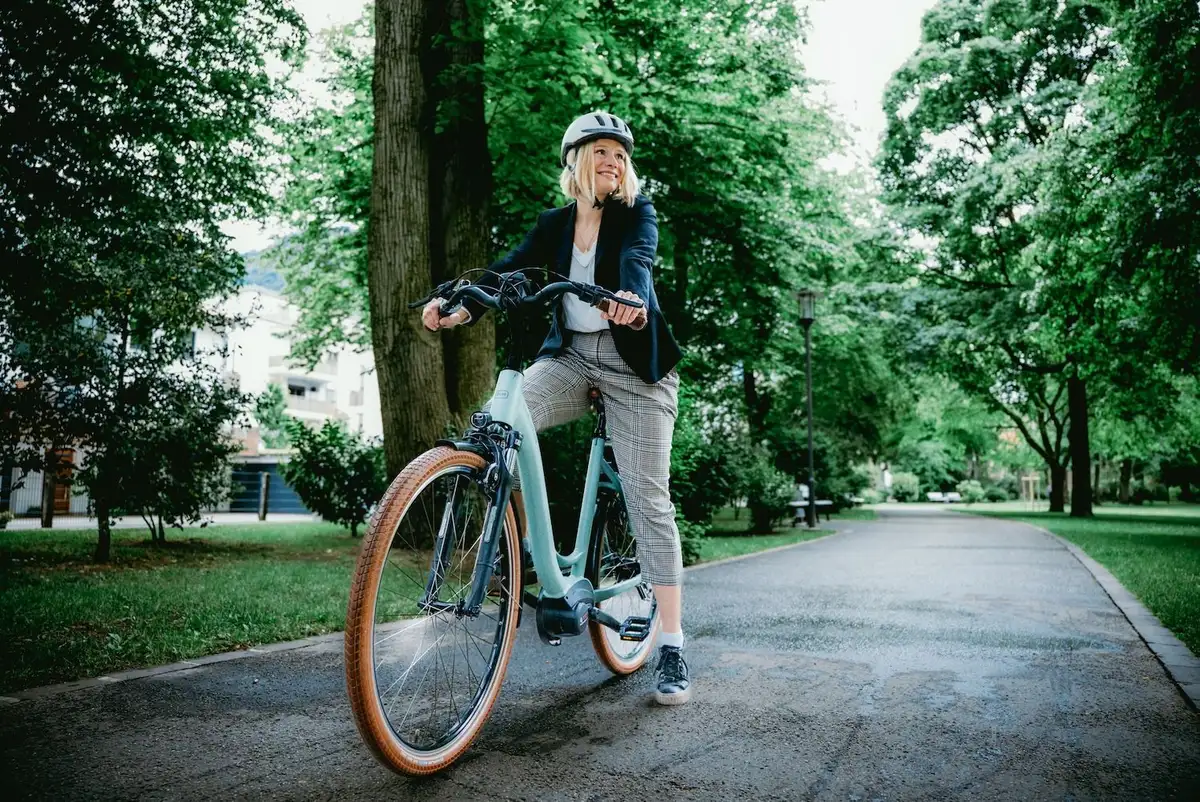
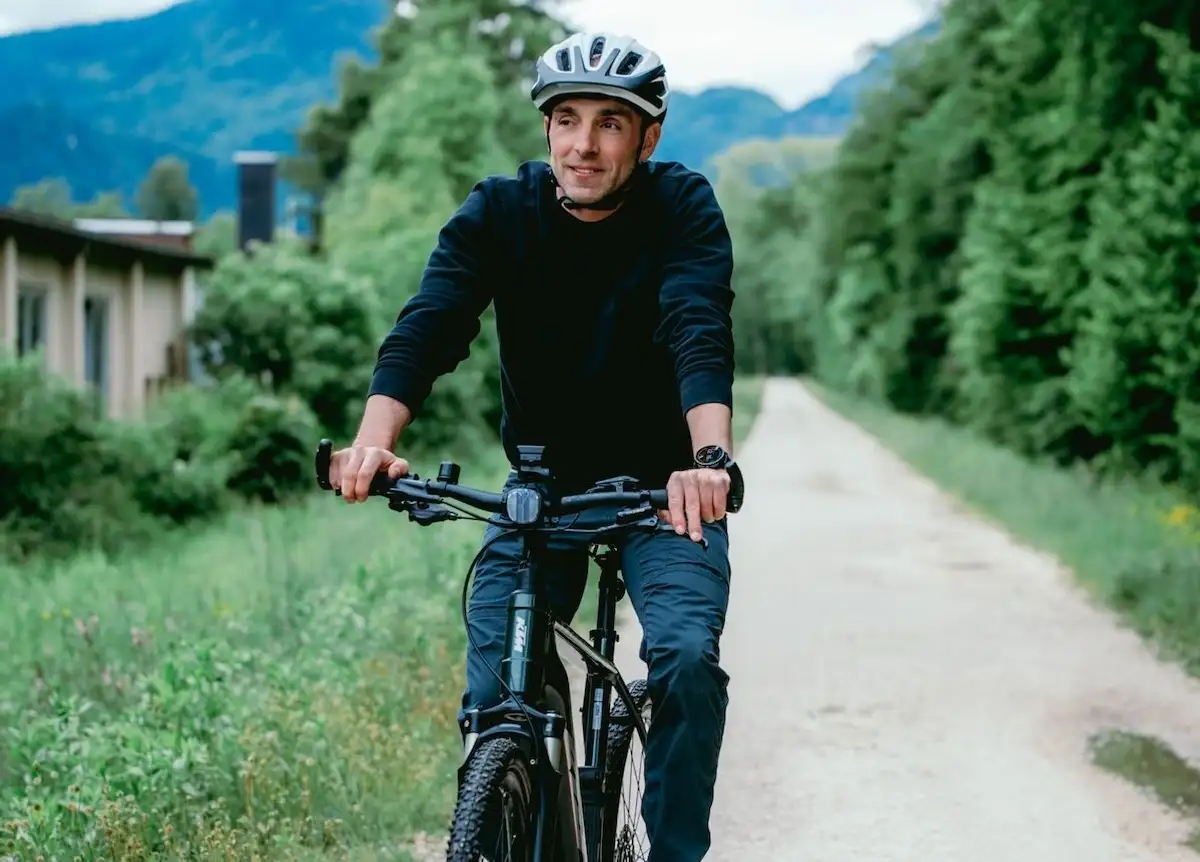
The e-bike and its significance in the bicycle market.
The latest market data from the industry association ZIV – The Bicycle Industry – illustrates just how significant this segment has become. According to ZIV, approximately 2.0 million e-bikes were sold in Germany in 2025, representing a market share of 52.7 percent of all bicycles sold. In total, there are now over 17 million e-bikes in circulation. By comparison, there are around two million electric cars. According to the latest ZIV market data, the average selling price for a new e-bike was 2,550 euros.
What is an e-bike?
An e-bike—technically known as a pedelec (pedal-assisted electric bicycle)—is a bicycle with electric pedal assistance. The motor operates only while the rider is pedaling and cuts off assistance at 25 km/h. The rated continuous power is limited to 250 watts, and there is no throttle. This combination determines its legal classification: In Germany, a pedelec is considered a bicycle. It requires neither a driver’s license nor an insurance sticker. Furthermore, helmets are not mandatory, and bike lanes may be used just like with any other bicycle.
Typical features of an e-bike include:
Drive unit: Mid-drive or rear motors with a rated continuous power output of 250 watts and, depending on the system, torque ranging from 40 to 150 Nm.
Battery: Capacities ranging from about 250 to 800 Wh, integrated into the down tube or mounted on the rack. In many cases, the battery is removable for charging at home.
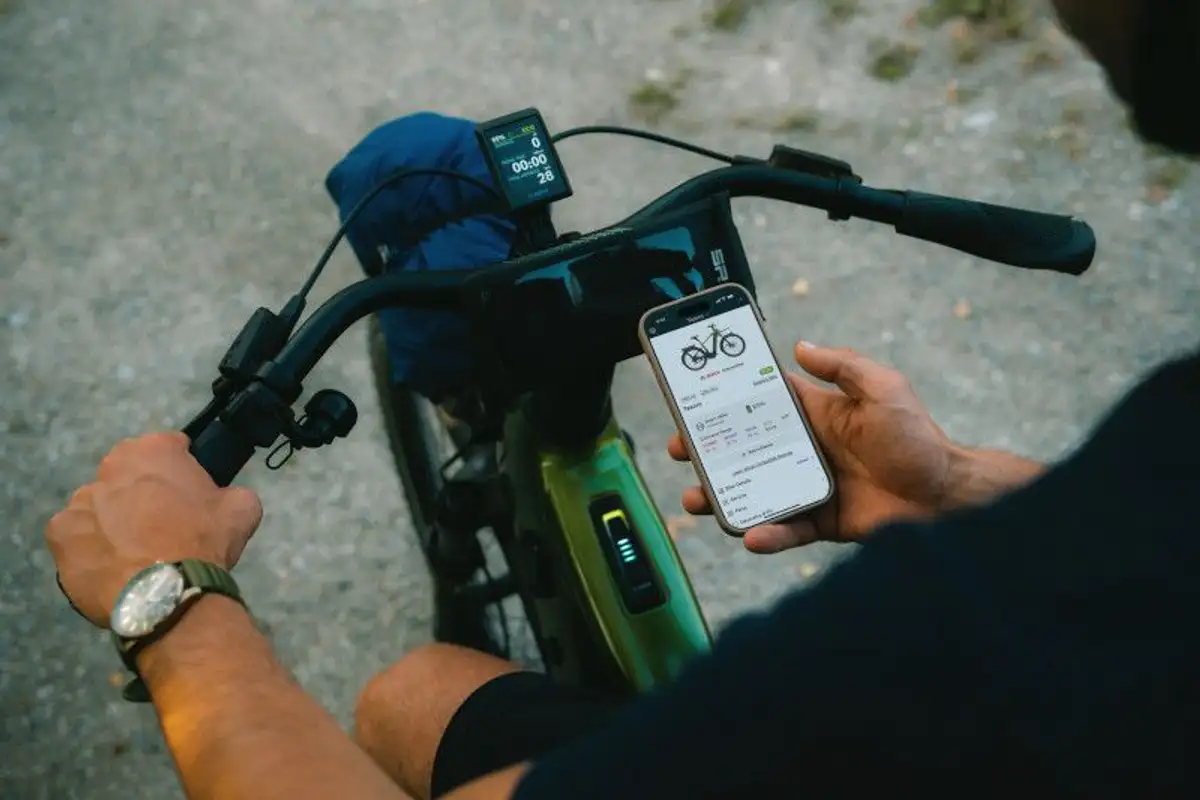
Control unit and display: Shows assistance level, remaining range, and speed; increasingly includes app connectivity and anti-theft features.
Reinforced frame: Designed to handle higher system weights and drive forces—often with an integrated battery mount.
High-Performance Brakes: Hydraulic disc brakes are standard, as e-bikes are heavier and, on average, are ridden faster than traditional bicycles.
Everyday Equipment in Accordance with StVZO: Permanently mounted lights with parking lights, reflectors, a bell, and—depending on the model—fenders, a rack, and a kickstand.
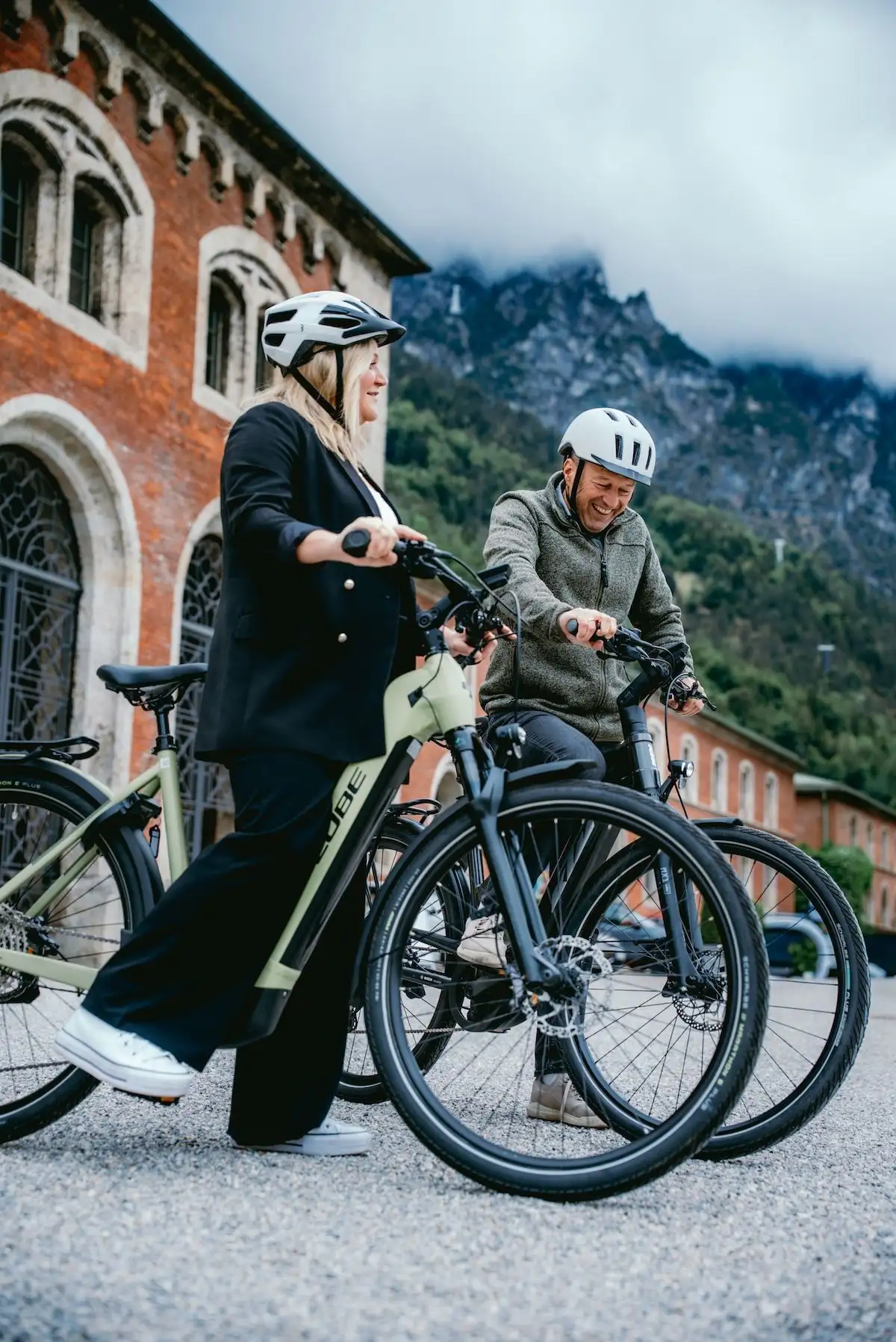
E-bike, Pedelec, S-Pedelec: A clear explanation of the terms.
In everyday language, any bike with a motor is called an e-bike. Technically, a pedelec is a bicycle with pedal assistance up to 25 km/h—this is the category that makes up virtually the entire market. An S-pedelec provides assistance up to 45 km/h, is classified as a moped, and requires an insurance plate, a vehicle registration certificate, a helmet, and at least an AM driver’s license. By contrast, e-bikes in the stricter, legal sense are bicycles that can be ridden using a throttle even without pedaling—they play virtually no role in the market. Anyone interested in the faster option can find the details in the article on S-pedelecs.
E-bike vs. Bicycle vs. S-Pedelec: Here are the differences.
At first glance, the main difference between an e-bike and a traditional bicycle is the drive system. In practice, however, the motor affects much more: weight, handling, maintenance intervals, and the realistic daily distance. And as soon as the assistance exceeds 25 km/h, the legal classification also changes. The following overview provides a direct comparison of the most important differences:
Bicycle
Max. assistance: none
Legal status: bicycle
Registration: not required
Driver's license: not required
Helmet requirement: no, but recommended
Use of bike lanes: permitted and required
Target group: all cyclists
Blood alcohol limit: 1.6 per mille (lower if driving is impaired)
Price: approx. 1,000–10,000 €
E-bike (Pedelec)
Max. assistance: up to 25 km/h
Legal status: Bicycle
Registration: Not required
Driver’s license: Not required
Helmet requirement: No, but recommended
Use of bike lanes: permitted and required
Target audience: all cyclists
Blood alcohol limit: 1.6 per mille (lower if driving is impaired)
Price: approx. €2,000–8,000
S-Pedelec (Speed-Pedelec)
Max. assistance: up to 45 km/h
Legal status: Moped (L1e-B)
Registration: Insurance plate & operating permit
Driver’s license: Class AM (included in a car driver’s license)
Helmet requirement: Yes (appropriate helmet meeting ECE standards or NTA 8776)
Use of bike lanes: Generally prohibited (must ride on the road)
Target audience: Long-distance commuters, people switching from cars
Blood alcohol limit: 0.5 per mille (same as for cars)
Price: approx. €4,000 – 12,000

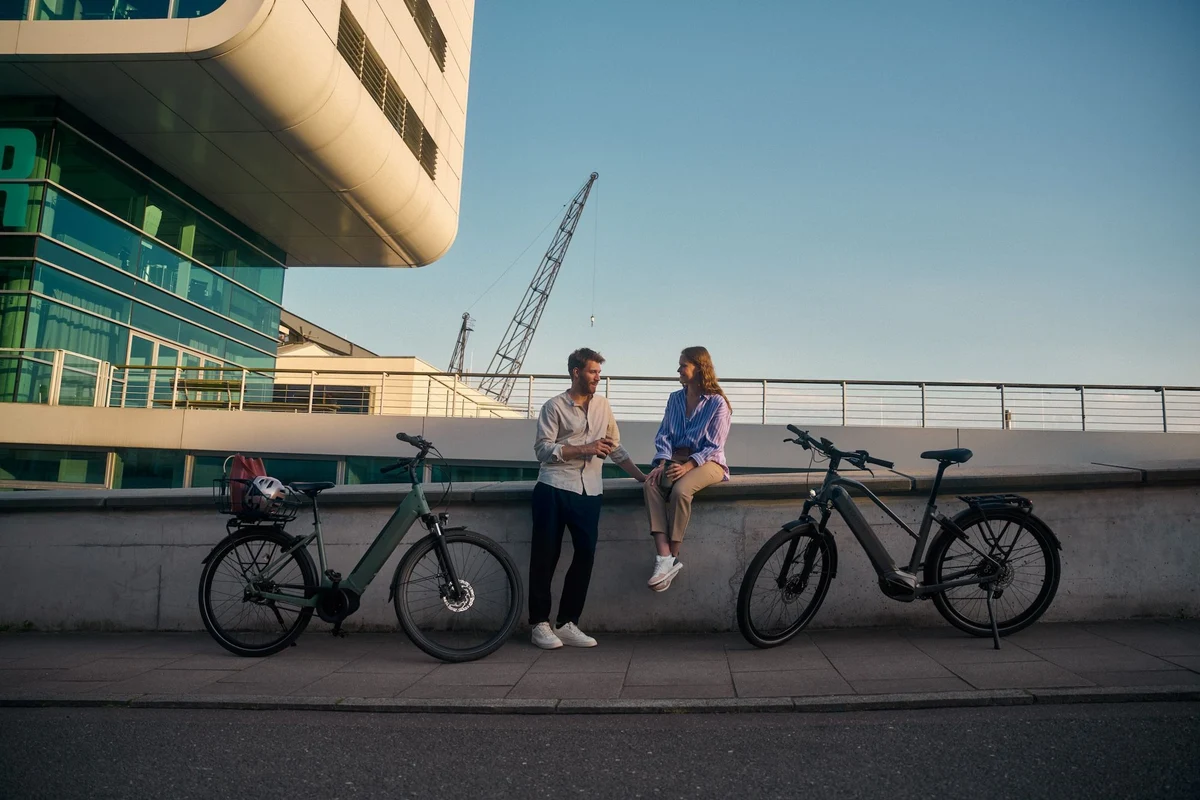
These are the different types of e-bikes and their uses.
Not all e-bikes are the same.
Frame shape, geometry, tire width, and features vary considerably depending on the intended use—and so does the question of who a particular model is best suited for. Someone who rides seven kilometers through the city center every day needs a different bike than someone who climbs hills on the weekends. The following categories have become established on the market:
E-city bike – Comfortable for city commuting
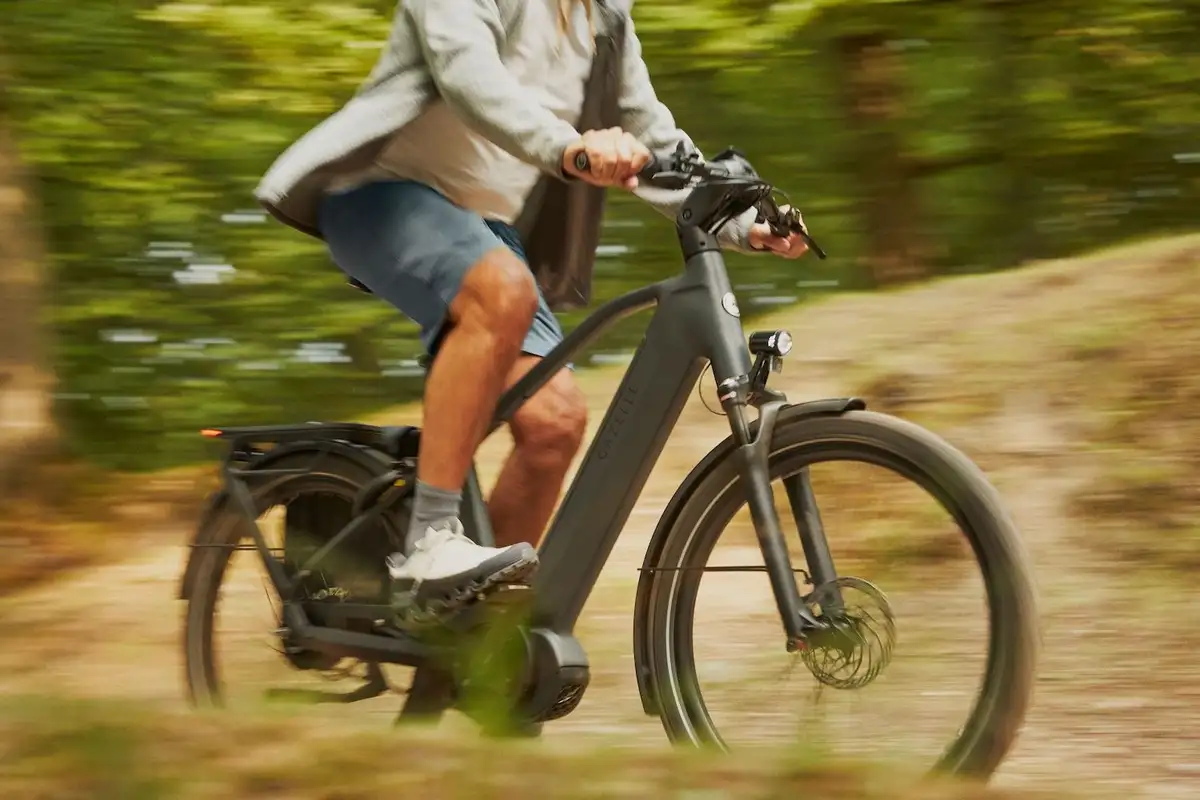
The e-city bike is designed for short to medium-length everyday trips: it features an upright riding position, often a low step-through frame, and comes fully equipped to meet StVZO requirements, including lights, fenders, a rack, and a kickstand. Low-maintenance hub gears and belt drives are widely used here. This makes it ideal for commuting to work, running errands, or taking the kids to daycare—basically anywhere where practicality is more important than sportiness. More information about the e-city bike is available in the article "E-citybike explained".
E-trekking bike – The All-around bike for everyday use and tours
E-trekking bikes combine everyday practicality with touring capabilities. They have a sportier design than city bikes, often feature a suspension fork, larger batteries, and a wider gear range. This makes them suitable for longer commutes as well as weekend tours or multi-day cycling trips with luggage.
E-mountain bike – Off-road assistance
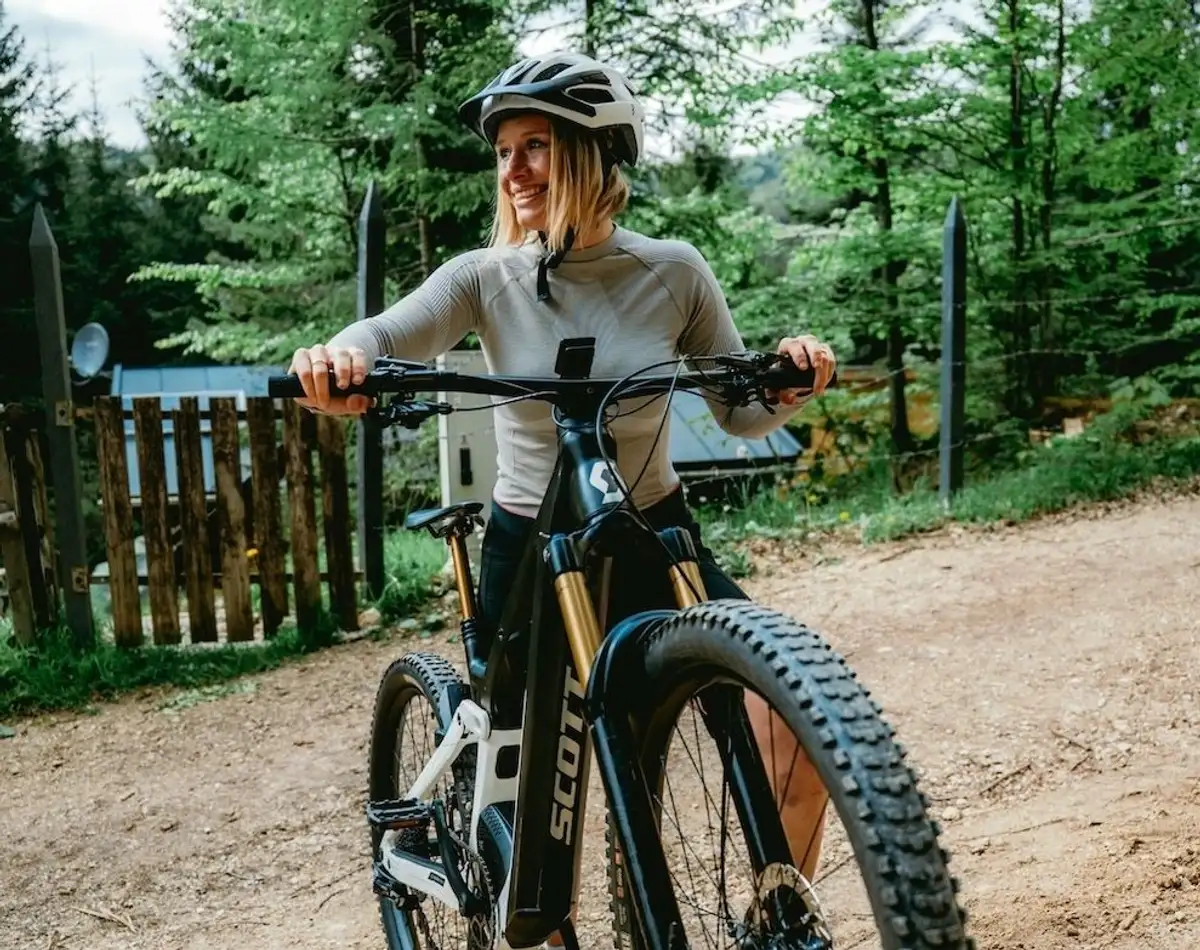
E-MTBs combine the off-road capabilities of classic mountain bikes with powerful motors and large batteries. They are available as hardtails with suspension forks or as full-suspension bikes with up to 180 millimeters of travel. With a share of about 38 percent of e-bikes sold, this segment is the largest on the market—and also one of the most versatile, as our e-mountain bike overview shows.
Electric cargo bike – transportation without a car
Electric cargo bikes replace a second car for short trips. Depending on the model—Long John, Longtail, or three-wheeled trike—they transport children, groceries, or tools, carrying payloads ranging from 80 to over 200 kilograms to their destination. Without motor assistance, this would be virtually impossible, which explains the high proportion of electric models in this category. More information on electric cargo bikes is available in the article "Cargo bikes explained".
E-gravel bikes and e-road bikes – for a sporty ride
In the sports segment, the drivetrains are deliberately designed to be understated. Lightweight systems with 40 to 60 Nm of torque and smaller batteries keep the overall weight low and preserve the natural riding feel. E-road bikes and e-gravel bikes even out performance differences within groups and extend the range without turning the bike into a different kind of vehicle. Perfect for anyone who prefers a sportier ride.
E-compact and E-folding bikes – small, agile, and versatile
Compact bikes with 20-inch wheels and folding bikes are designed to save space. They fit in small apartments, in the trunk of a car, and—when folded—on trains and buses. For people who combine biking with public transportation, they are often the most practical solution.
SUV e-bike – For everyday use and light off-road riding
SUV e-bikes are a cross between a trekking bike and a mountain bike: they feature a sturdy frame, wide tires, a powerful motor, plus fenders, lights, and a rack. They’re designed for anyone who commutes on weekdays and also rides on gravel and forest trails on the weekends.
Light e-bike – Subtle assistance, lightweight
The newest e-bike category features compact motors and smaller batteries. The result is bikes with a total weight of 14 to 19 kilograms that ride almost like non-motorized bicycles. If you view the assistance merely as a tailwind rather than a propulsion system, you’ll find the right model here.
An overview of e-bike types.
Type | Ideal for | Typical battery size |
E-city bike | City trips up to 15 km | 400–625 Wh |
E-trekking bike | Commuting, Day Trips, Travel | 500–800 Wh |
E-mountain bike | Trails, Mountains, Terrain | 600–800 Wh |
Electric cargo bike | Children, Shopping, Transportation | 500–1.000 Wh |
E-gravel/E-road bike | Sports, long distances | 250–450 Wh |
E-compact/E-folding bike | Commuting by train, limited space | 250–500 Wh |
SUV e-bike | Everyday use plus light terrain | 600–800 Wh |
Light e-bike | sporty driving style, weight | 250–430 Wh |
What people actually buy in Germany.
Sales figures clearly show how differently the segments are weighted. According to ZIV market data for 2025, e-mountain bikes accounted for 38 percent of e-bikes sold, e-trekking bikes for 24 percent, and e-city bikes for 19 percent. E-cargo bikes accounted for 9.5 percent—a figure that has more than quadrupled in ten years. It’s striking that many e-MTBs are ridden primarily on paved trails.
Our tip: If you honestly assess where the bike will actually be used, you can often save on weight, money, and maintenance.
An Overview of e-bike drives and batteries.
Der Antrieb bestimmt beim E-Bike Fahrgefühl, Reichweite und Wartungsbedarf stärker als jedes andere Bauteil. Grundsätzlich gibt es dabei zwei Bauarten: Der Mittelmotor sitzt am Tretlager, nutzt die Gangschaltung mit und sorgt durch die zentrale Gewichtsverteilung für ausgewogenes Handling – die Standardlösung in nahezu allen Segmenten. Der Heckmotor in der Hinterradnabe beschleunigt wiederum kraftvoll in der Ebene, arbeitet sehr leise und schont die Kette, ist am Berg aber weniger durchzugsstark..
Als Kennzahl für die Kraft gilt das Drehmoment in Newtonmetern. Für flache Stadtstrecken genügen 40 bis 65 Nm, für Touren mit Gepäck oder hügeliges Gelände sind 75 Nm und mehr sinnvoll. Diese Übersicht zeigt die wichtigsten Systeme am Markt:
Buying an e-bike: Seven steps to finding the right model.
The selection is vast, the price range is wide—and many people end up making poor purchases because they focus on the engine first and the intended use last. Following these seven steps in the correct order will help you make the right decision.
Determine the area of application and route profile
How long is the typical route, how much elevation gain is involved, and what is the terrain like? For flat city routes of up to 10 kilometers, a comfortable e-city bike with a medium-capacity battery is sufficient. For daily commutes of more than 20 kilometers or tours with luggage, an e-trekking bike is the better choice.
Determine the frame shape and ergonomics
Low-step, trapezoidal, and diamond frames differ not only in appearance but also in ease of mounting and stiffness. More important than any spec sheet is your riding position: frame height, handlebar position, and saddle should be adjusted at a specialty bike shop. A professional bike fitting is especially worthwhile for daily use.
Select an engine design
Mid-engine models are the right choice whenever inclines, payload, or terrain are factors. Rear-engine models excel on flat terrain with their quiet operation and minimal chain wear. It’s not so much the brand that matters as the tuning—and that can only be assessed during a test drive.
Check the battery capacity and charging status
The question isn't how much range is possible at most, but how often and where you can charge the bike. If you can charge it at the office or at home, 500 Wh is plenty. If the bike is stored in the basement without a power outlet, a removable battery is a must.
Consider features and safety
Hydraulic disc brakes, high-quality lighting that complies with StVZO regulations, and tires with puncture protection should be standard features on everyday bikes. When it comes to drivetrains, derailleur systems are sportier and lighter, while hub and belt-driven systems require significantly less maintenance.
Planning the budget, ongoing costs, and financing
In addition to the purchase price, you’ll need to factor in inspections, replacement parts, insurance, and a lock. A reliable e-bike for everyday use starts at around 2,000 euros. If you ride every day, you should budget around 3,000 euros. Good to know: With a company bike leasing program, these costs can be converted into a predictable monthly payment.
Take a test drive and check out service partners
Two bikes with identical spec sheets can feel completely different. Our tip: Test ride at least two models—ideally on your own route. It’s just as important to have a specialized shop nearby that can service the drive system. After all, with e-bikes, service is part of the product.
The battery determines the e-bike's range.
For batteries, the capacity in watt-hours determines the range. As a rough guide, consumption ranges from 7 to 15 Wh per kilometer—depending on the assist level, load, tire pressure, terrain, and temperature.
Note: In winter, the range can decrease by 20 to 30 percent.
Lease an e-bike with Lease a Bike: The smart alternative.
Leasing an e-bike is often a more economical option for employees than buying one outright. Instead of a large one-time payment, the lease payment is deducted directly from the employee’s gross salary through payroll deduction. This reduces income tax and social security contributions, and the monetary benefit for personal use is taxed according to the 0.25 percent rule. Figures from the Zukunft Fahrrad association show just how relevant this model is to the market: the fleet of leased bikes has recently grown to 2.2 million.
E-bike leasing with Lease a Bike and its benefits at a glance:
Up to 40 percent cheaper than buying outright: Salary conversion reduces tax and social security contributions. The savings depend on your income, tax bracket, and the price of the bike, and are particularly significant for high-end models.
No large upfront investment: Instead of paying several thousand euros all at once, the e-bike is financed through fixed monthly payments. This provides planning certainty and makes even better-equipped bikes more accessible.
Free choice of model at specialty retailers: You choose the brand, type, and features yourself - from e-city bikes to e-trekking bikes to e-cargo bikes- either online or directly at your local dealer.
Unrestricted personal use: The company bike may be used for personal purposes without restriction, including weekend trips, shopping, or vacations.
Flexibility at the end of the term: After 36 months, you can purchase the bike, return it, or replace it with a new model. The residual value upon purchase is typically between 15 and 18 percent.
Lease a Bike All-Around Protection: Service that makes a difference in everyday life.
An e-bike is a technically complex vehicle—and the more it’s ridden, the more important maintenance and wear and tear become. Lease a Bike’s comprehensive protection plan therefore bundles exactly the services needed for everyday company bike use: a budget for inspections and wear-and-tear repairs, coverage for theft and damage, and a Europe-wide mobility guarantee with 24/7 roadside assistance. If the bike breaks down on the road, assistance is arranged even outside of specialty shops’ business hours. For commuters, this means predictable costs instead of unexpected repair bills. The specific services included depend on the selected package and are clearly outlined in the lease agreement.
More information about Lease a Bike’s All-Around Protection.
Conclusion: From a mobility aid to the best-selling bicycle.
In just a few years, the e-bike has evolved from a niche product to the norm—and has become so diverse that the umbrella term hardly says anything about the individual bike anymore. Anyone choosing a model should therefore start not with the motor and watt-hours, but with their own route: distance, elevation gain, payload, and parking situation. Based on these four factors, the category almost chooses itself, and only then is it worth looking at the drive system, battery, and features.
That leaves the question of cost. An e-bike suitable for everyday use is an investment that pays for itself over its useful life—especially if it replaces car trips. The Dienstrad leasing program spreads this investment out over predictable monthly payments and includes maintenance, wear and tear, and roadside assistance. In the end, what remains is exactly what an e-bike is all about: covering those last three kilometers uphill without it becoming a grueling effort.